
NanoFeast
What happens when food stops being scarce—but power does not?
NanoFeast begins with a machine designed to make food programmable—but the story is not about a magic cure for hunger. The breakthrough collides with farming, water, poverty, logistics, public infrastructure, markets, conflict, black economies, law, and the worldwide question of who controls access to abundance.

The four-book engine
The Startup is the beginning. From there the same breakthrough expands into relief, politics, shadow markets, dependence, and system-level stress.

The Startup
The breakthrough becomes infrastructure.
The launch novel follows first mass deployment and the people forced to decide what the invention is for.
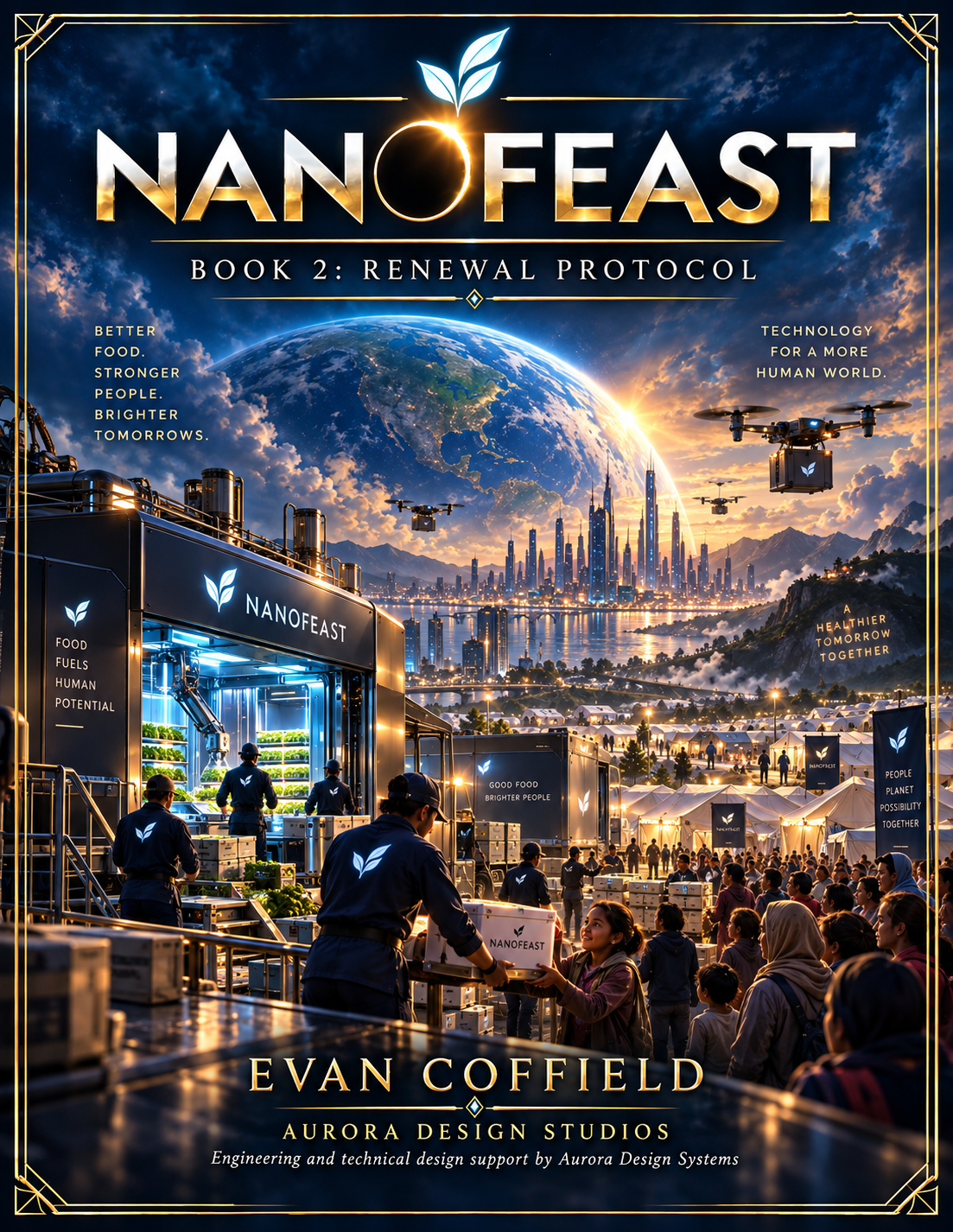
Renewal Protocol
Relief becomes a political system.
Expansion brings humanitarian promise, institutions, manufacturing pressure, and disputes over control.
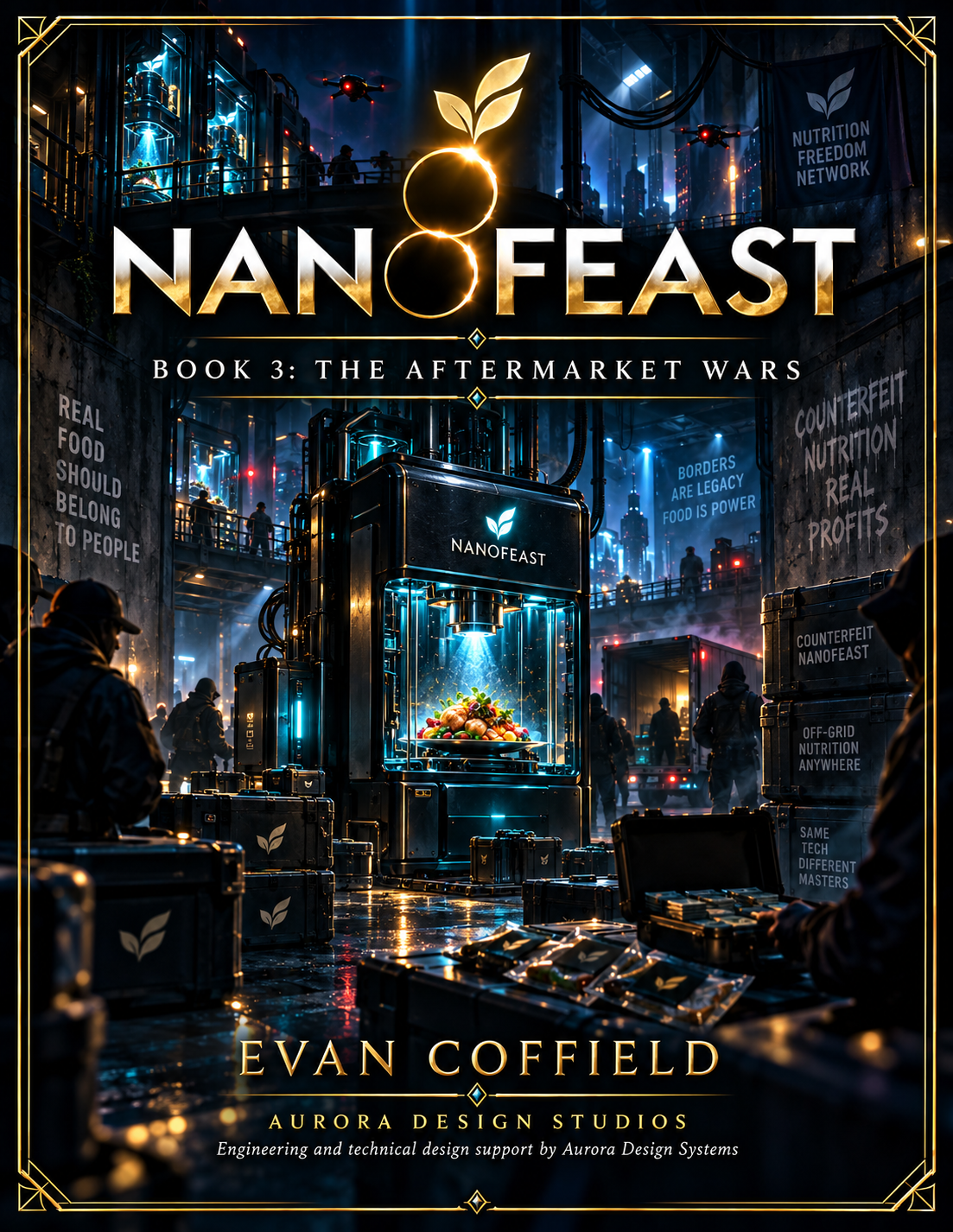
The Aftermarket Wars
Abundance develops a shadow economy.
Clones, pattern piracy, illicit feedstocks, sabotage, and competing systems create a new conflict.

Ember Protocol
The system is tested by collapse.
A civilization that has come to depend on abundance infrastructure must decide what resilience really means.
Trials & Dispatches
Three companion books widen the world into law, culture, local consequences, and shorter global stories without changing the four-book core.

Trials of the Council
Law, rights, accountability, sovereignty, access, and ownership.

Global Dispatches
Country-by-country stories of people and institutions living with the technology.

Golden Dispatches Anthology
Additional short-form stories from the mature NanoFeast world.
Hunger is one visible outcome of a much larger food-system problem.
NanoFeast is fiction. Poverty, conflict, displacement, water shortages, climate shocks, storage losses, transport failures, market access, and the price of a healthy diet are not. No single invention solves all of them.
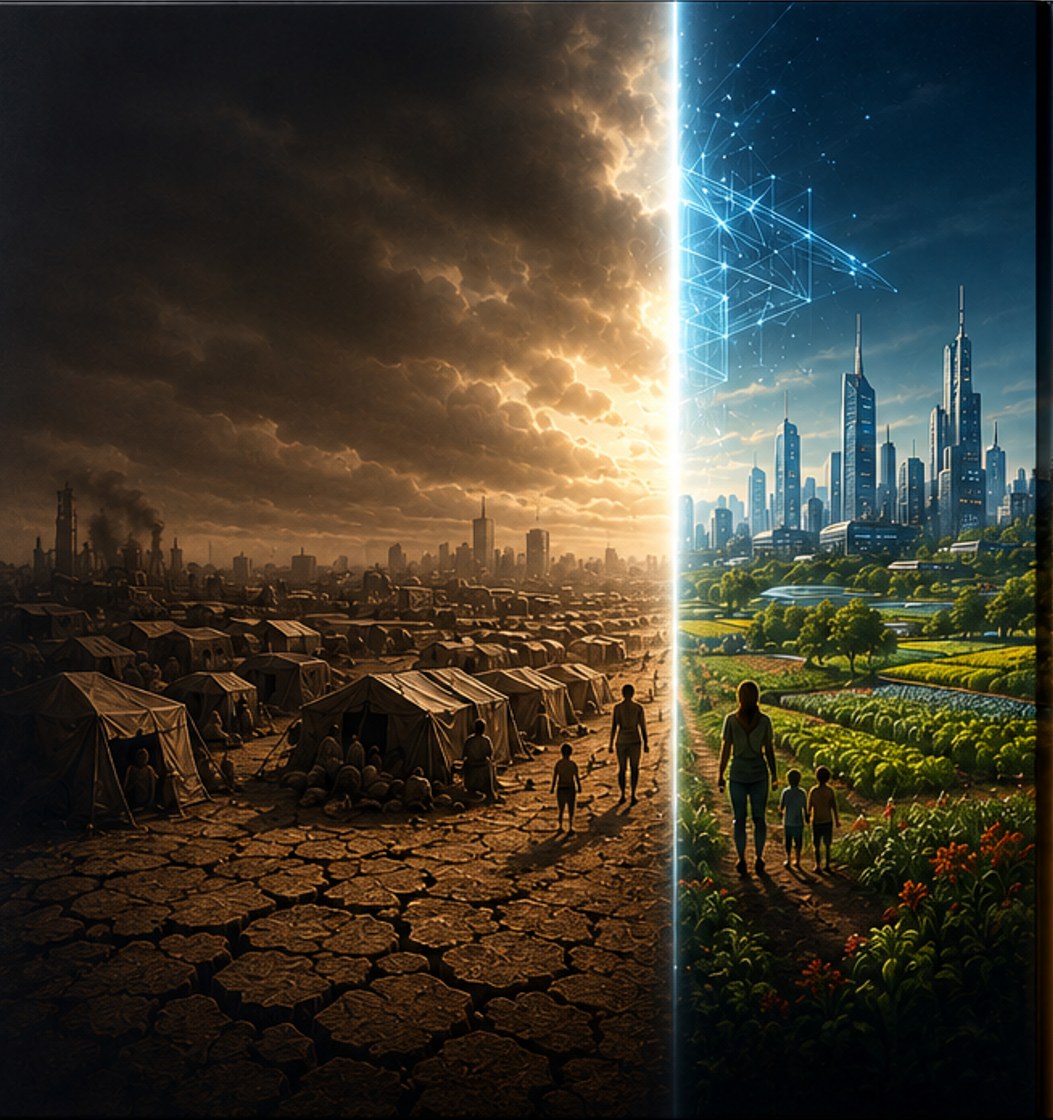
A durable answer needs more than production.
NanoFeast belongs beside better farming, protected growing, clean water, stronger logistics, fair access, and resilient public systems—not in place of them.
Stronger agriculture
Healthier soils, better seeds, precision water use, crop diversity, and climate adaptation.
02 · Protected growingVertical & controlled environments
Local year-round production with less exposure to weather, poor soil, and some pests.
03 · WaterWater security
Treatment, reuse, storage, sanitation, irrigation efficiency, and drought planning.
04 · LogisticsStorage & transport
Cold chains, local processing, resilient transport, and less waste between farm and table.
05 · AccessAffordability & fair markets
Food can remain economically viable without making basic nutrition unreachable.
06 · New toolsNanoFeast where it adds resilience
Emergency, remote, and disrupted supply settings where local production can fill a real gap.
Abundance is a systems problem
The public site keeps the main page readable and routes deeper architecture into daughter pages. The story is not only about a device; it is about what happens when a device becomes infrastructure.
X-Series & Pattern Systems
Follow the X1–X10 progression from personal food fabrication to large-scale abundance infrastructure.
FoodFood Systems
Recipes, pattern files, nutrition, culinary identity, community feeding, and the meaning of food after replication.
AgricultureFarms Still Matter
Conventional agriculture, controlled-environment farming, ecological stewardship, and hybrid resilience rather than a one-machine monoculture.
WaterWater & Resilience
Safe water remains co-equal with food: treatment, reuse, storage, drought, disaster recovery, and local continuity.
HumanitarianRelief & Rebuilding
Emergency feeding, shelters, logistics, local authority, dignity, and the hard transition from relief to durable recovery.
EconomicsMarkets After Scarcity
Feedstock, labor, pricing, licensing, ownership, black markets, displaced industries, and new forms of leverage.
GovernancePublic Power & Rights
Procurement, regulation, sovereignty, emergency authority, public accountability, and the question of who can shut the system off.
SocietyEveryday Life Changes
Family routines, cuisine, dignity, inequality, dependency, trust, migration, and what people choose to keep when abundance arrives.
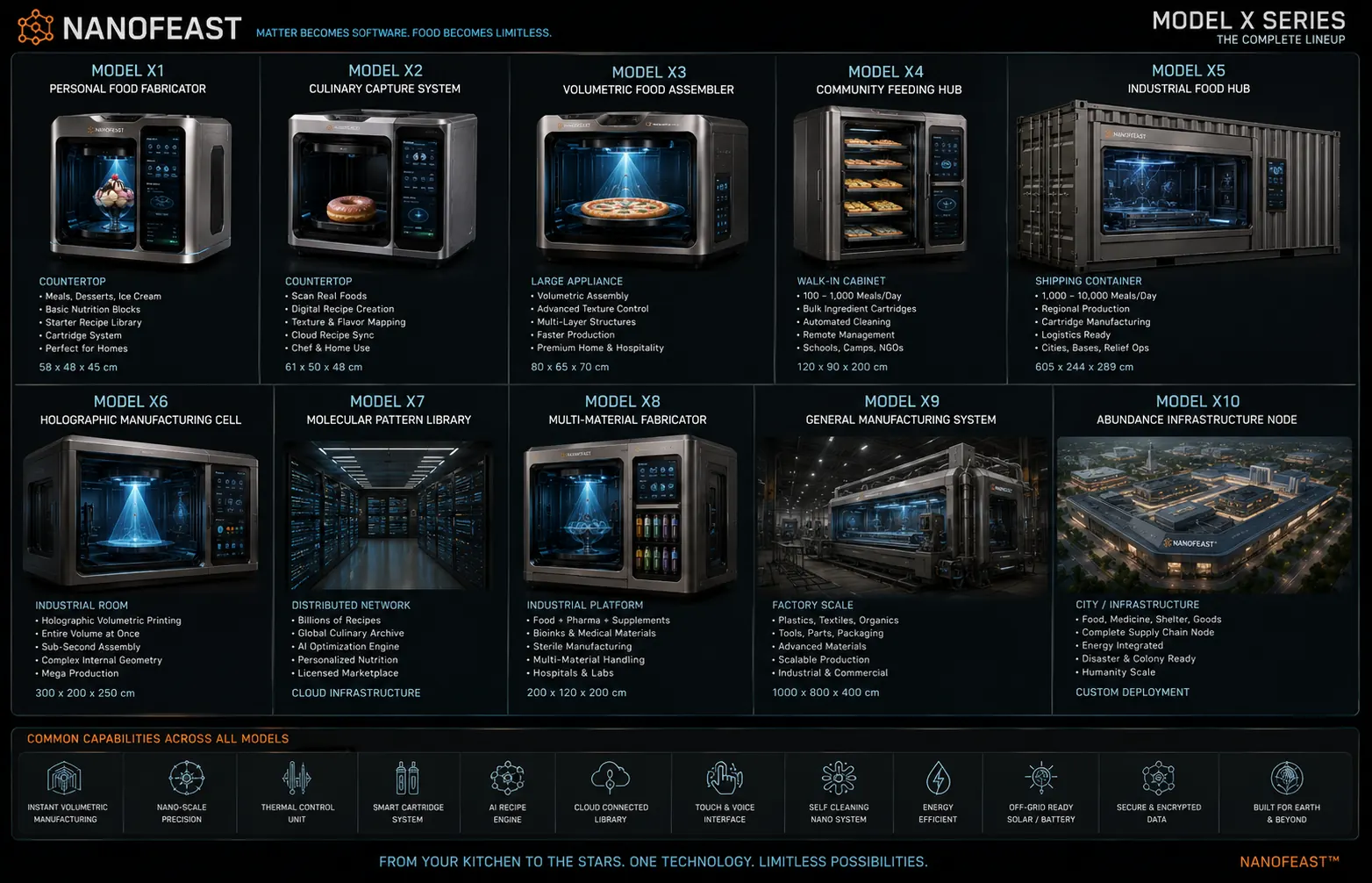
From countertop machine to civic infrastructure
The X-Series gives the story a visible escalation path. X1 makes the breakthrough personal. Later models move into community feeding, industrial production, pattern libraries, multi-material fabrication, and city-scale deployment.
Ending hunger does not end conflict
NanoFeast treats abundance as the beginning of the political problem, not the end. Access, authenticity, control, culture, failure, and recovery remain human problems even when production technology becomes extraordinary.
Access
Who receives the technology first, and what obligations follow when survival depends on access?
Sovereignty
Can a community be food-secure if the patterns, feedstock, software, or authorization remain controlled elsewhere?
Failure
What happens when resilient-looking infrastructure becomes a single point of dependency?
Rebuilding
After disruption, do people restore the old hierarchy, decentralize the system, or build something genuinely different?

A story universe built for books, screen development, and visual worldbuilding
Public pages show the premise and story architecture. Full manuscripts, controlled bibles, proprietary technical development, and deeper production material are available only through appropriate review channels.