The shared vulnerability
Crop-derived cartridges and organic ingredient streams inherit the risks of their source. Livestock also depend on feed, water, health and functioning processing networks.
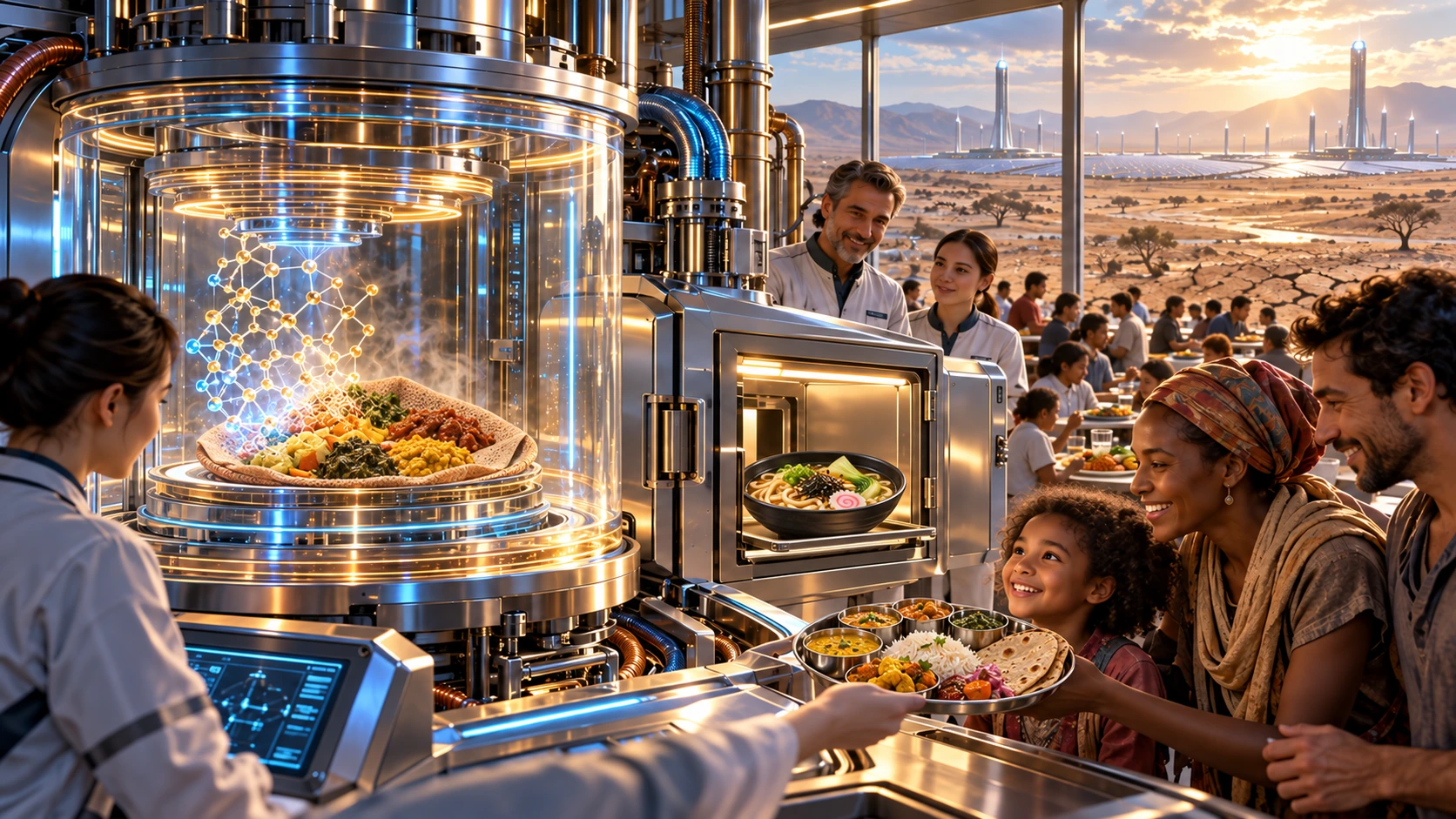
Drought and floods can destroy harvests. Animal disease can remove food at enormous scale. Processing and transport disruptions can prevent existing food from reaching people. NanoFeast begins with those vulnerabilities and imagines a fundamentally different response: food created through advanced matter reconstruction and energy-to-matter technology.
The following examples document real losses and disruptions. They provide the background for the series’ fictional crisis; they do not predict a fixed date for global famine.
| Period | Event | Historical record | Source |
|---|---|---|---|
| 1991–2021 | Global disaster losses | FAO’s 2023 assessment estimated $3.8 trillion in crop and livestock production losses, averaging $123 billion annually. | FAO, 2023 |
| 1991–2023 | Global disaster losses | FAO’s 2025 assessment estimated $3.26 trillion in agricultural losses, including 4.6 billion tonnes of cereals and 2.8 billion tonnes of fruit and vegetables. | FAO, 2025 |
| 2014–2015 | U.S. avian influenza | More than 50 million chickens and turkeys died or were destroyed to stop the spread of highly pathogenic avian influenza. | USDA Economic Research Service |
| 2011 | Texas drought | Texas AgriLife Extension’s updated estimate put agricultural losses at $7.62 billion. | Texas A&M / Texas Water Resources Institute, March 2012 |
| 2019 | Prevented planting in the United States | By August 12, producers had reported being unable to plant more than 19.4 million acres. This was a dated reporting snapshot. | USDA Farm Service Agency |
| 2020 | Meat-processing disruption | COVID-19 closures and slowdowns sharply reduced cattle and hog processing capacity. A contemporary research review described on-farm culling when animals could not be processed. | Federal Reserve Bank of Kansas City; research review |
The FAO figures come from separate report editions with different assessment periods and methods. They are presented separately and should not be combined into one total.
For the processing-disruption case, see also the research review COVID-19 Effects on Livestock Production: A One Welfare Issue. An exact total of U.S. hogs euthanized is not asserted here.
Crop-derived cartridges and organic ingredient streams inherit the risks of their source. Livestock also depend on feed, water, health and functioning processing networks.
The Nano Replicator pursues progressively independent atomic and elemental sourcing, controlled matter reconstruction and ultimately energy-to-matter food creation. Meaningful research and milestones belong in Book I.
Rugged systems first serve regions facing severe shortages, providing food, drinking water and beverages. Energy, heat removal, containment, independent verification, repair and accountable local institutions make that access durable.
NanoFeast’s circa-2099 crisis and 22nd-century food-creation technology are speculative fiction. The historical evidence explains the story’s urgency; the new physics is the imaginative breakthrough it explores.