Deployment
Bring creation capability before crisis peaks
Pre-position replicators, appropriate energy capacity, cooling equipment, spares and trained teams so food access need not wait for the next shipment of organic ingredients.
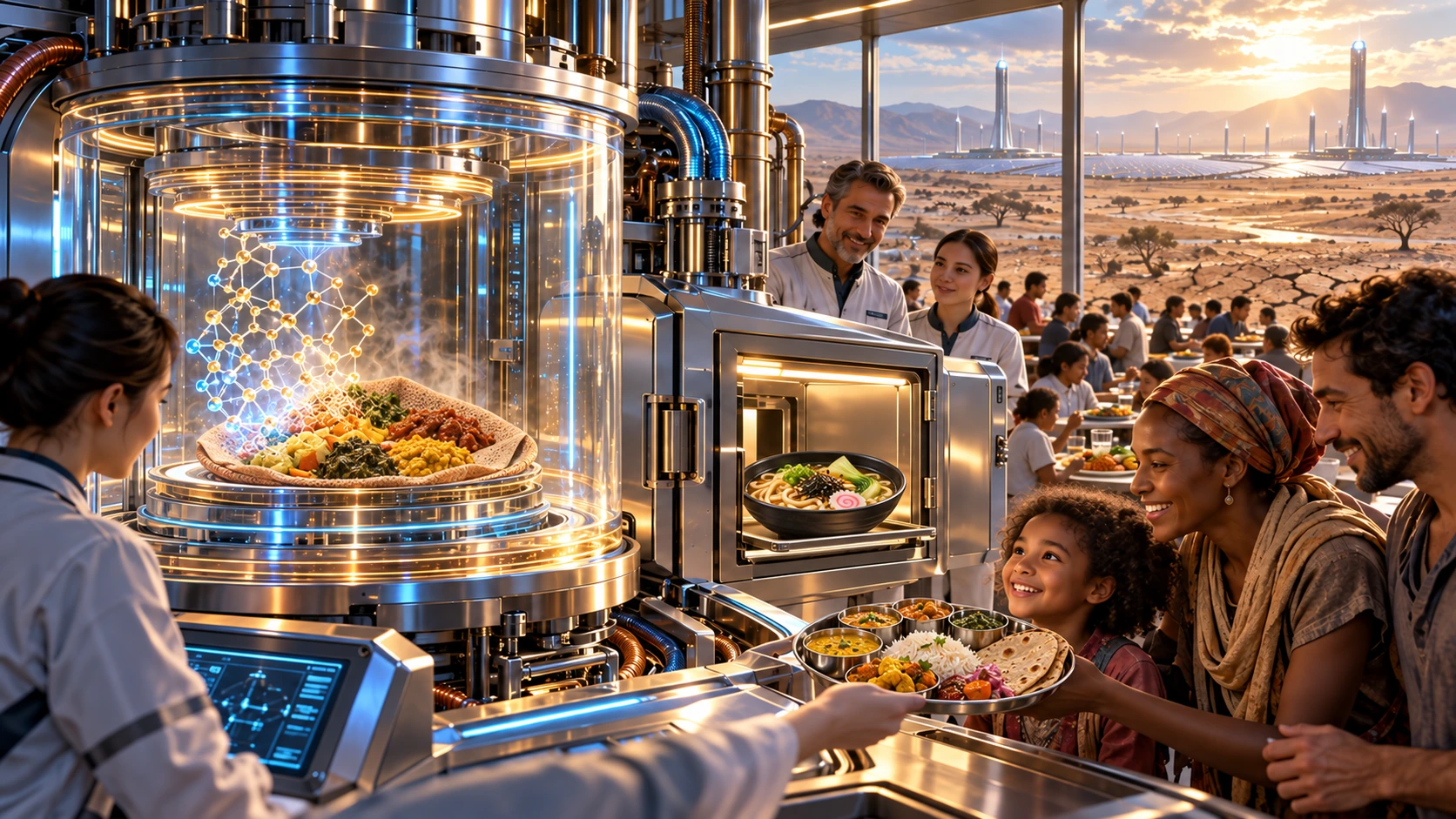
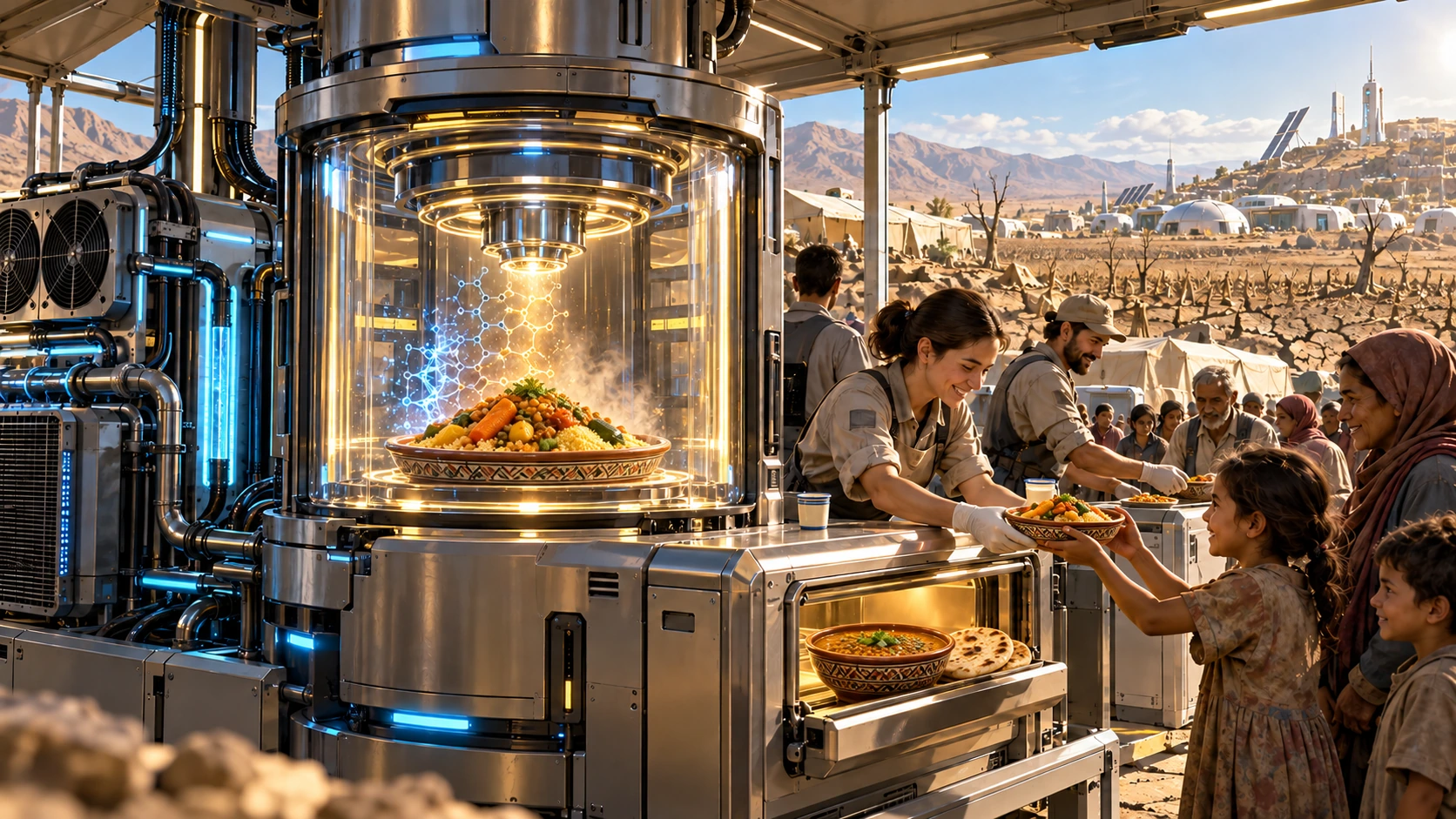
When harvests, livestock and relief routes fail together, NanoFeast’s rugged replicator hubs create food, drinking water and beverages where people need them most. Deployments prioritize regions facing severe shortages and adapt to heat, dust, humidity, transport damage and unreliable utilities. Wider adoption follows as capacity grows; energy, heat management, verification and local teams sustain the breakthrough.
Each page reveals a different part of the same story. The active area is highlighted below.
From science to social impact
Nutrition, health and food systems
Farms, soils and food security
Clean water for people and places
Relief, resilience and dignity
Markets, work and shared prosperity
Power, rights and accountability
People, culture and a better tomorrow
These public summaries preserve the current story architecture without turning the site into a technical manual.
Pre-position replicators, appropriate energy capacity, cooling equipment, spares and trained teams so food access need not wait for the next shipment of organic ingredients.
Residents and local institutions share control, maintain systems and retain the capability after outside teams leave.
Verified composition, sanitation, clean serving areas, controlled release and reliable records remain essential to feeding people safely.
Conversion and thermal loads determine throughput. Stored energy and local generation support operation only within demonstrated capacity.
Known-good parts, service rights, independent checks and safe restart procedures sustain access when specialist support is distant.
Dietary needs, culture, privacy, fair queues and the right to participate in decisions matter throughout relief and recovery.