Evidence
Scientific records and lived experience challenge official accounts.
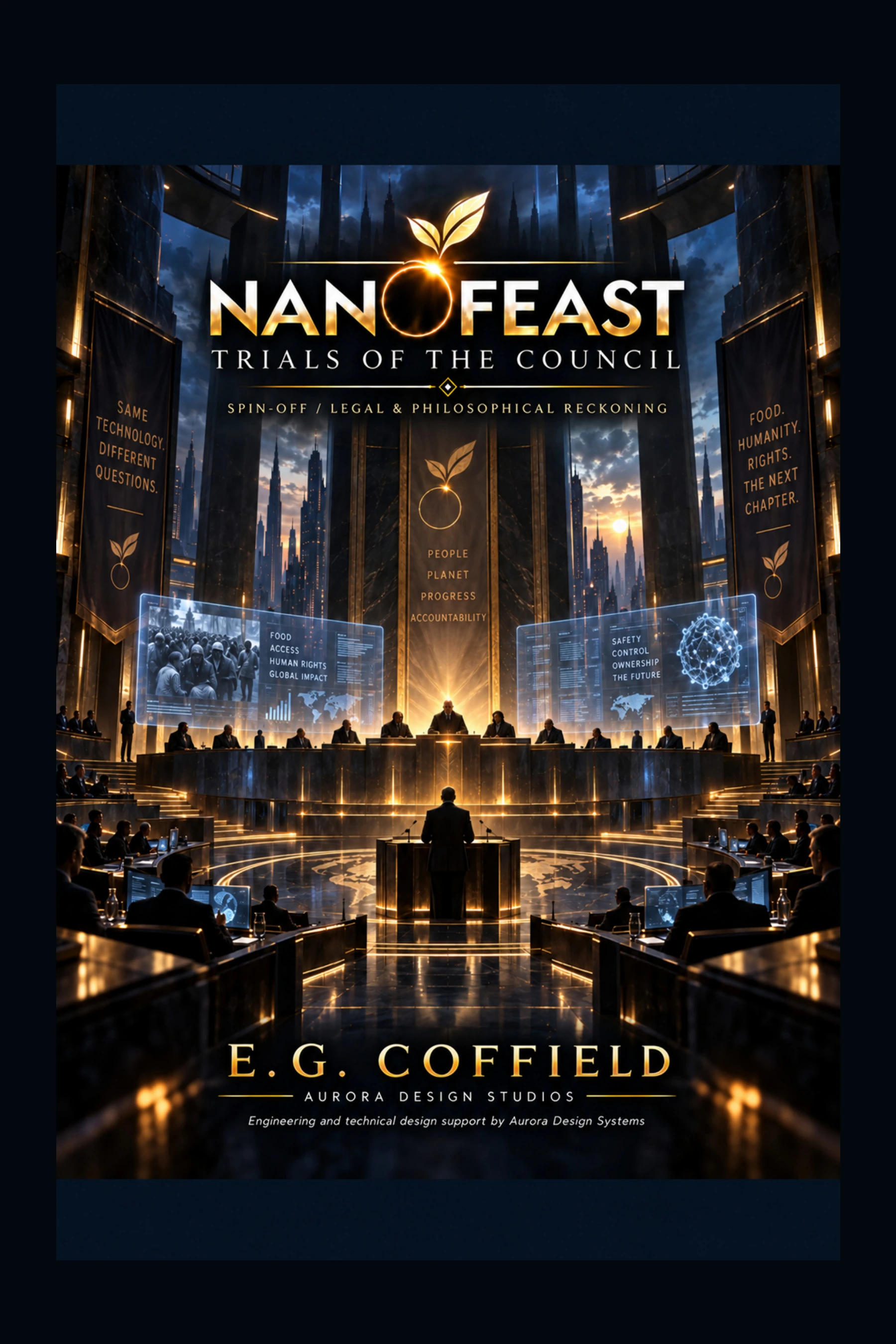
Who may control the creation of food?
A council examines the institutions built around NanoFeast’s food-creation breakthrough. Scientists, executives, aid workers and citizens bring evidence of lives saved, promises broken and the new powers acquired by those who control replicator access.
The hearings connect the science of matter reconstruction with food rights, energy access, safety claims and the authority to suspend essential service. Creating abundance does not settle who may govern it.
Scientific records and lived experience challenge official accounts.
A capacity to create food raises a duty to ensure access.
The power needed for survival becomes a public question.
Claims about matter creation require independent accountability.
The council examines who may govern the breakthrough.
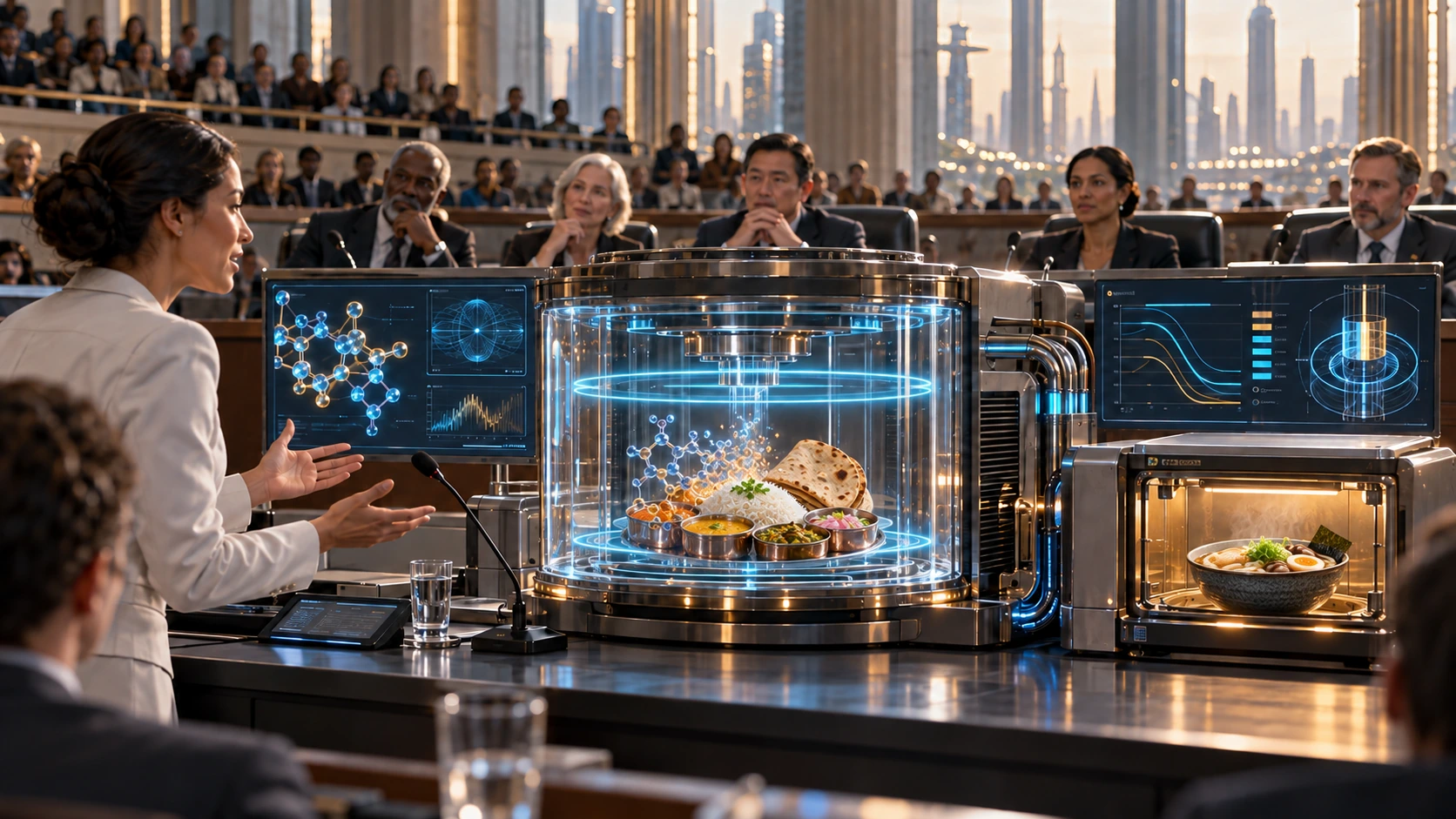
Trials of the Council explores the legal and ethical consequences of the Nano Replicator through competing evidence and lived experience. Its central question is whether a world capable of creating food will guarantee people the right to receive it.
A civic companion novel about who may control a technology capable of feeding people beyond agricultural scarcity.