The evolutionary premise
Intelligence followed different bodies.
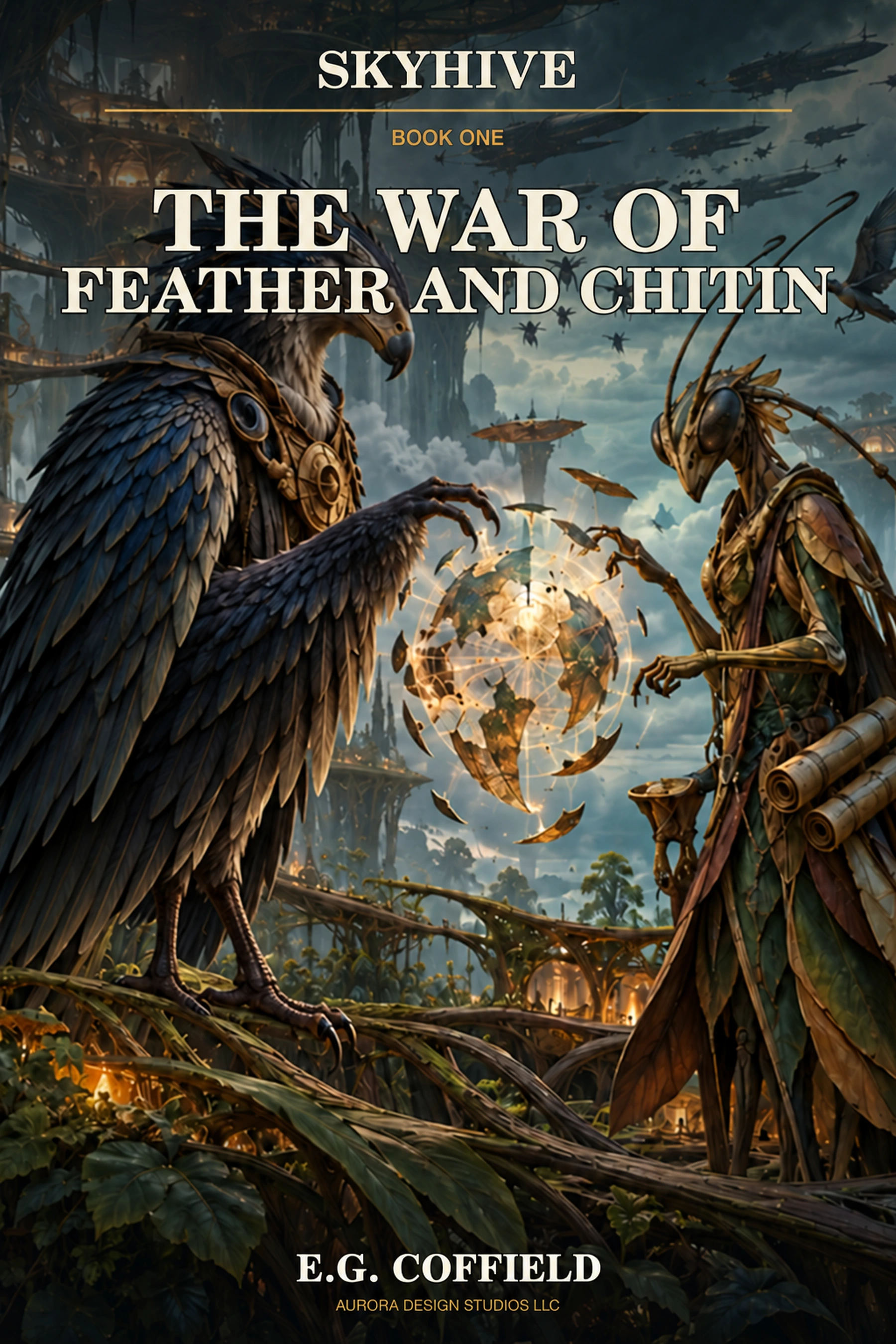
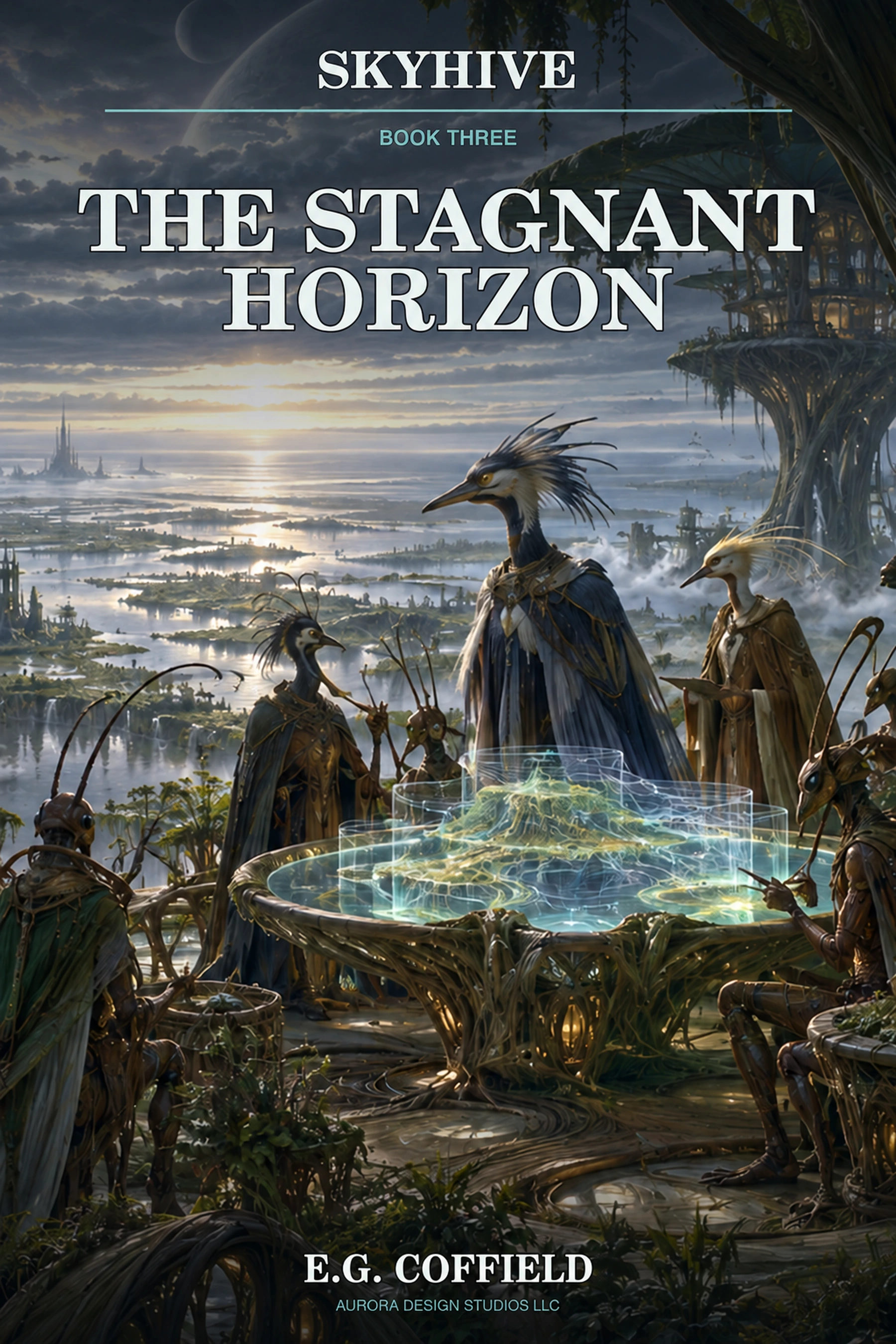
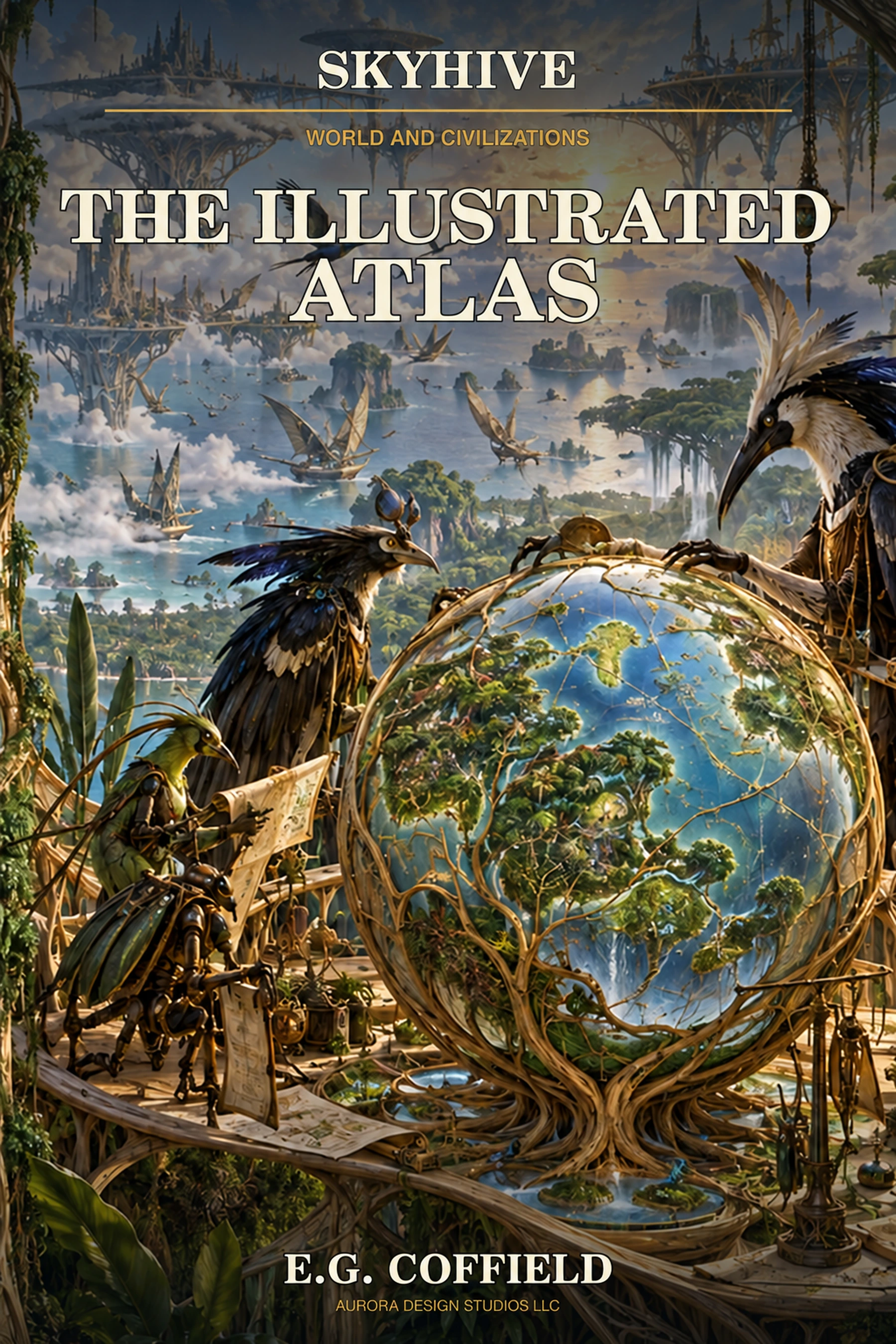
SkyHive reverses the familiar terrestrial assumption that advanced intelligence must emerge from mammalian hands, faces, and social behavior. Across the planet’s immense evolutionary history, feathered aerial lineages gained long-range perception, memory, communication, flexible manipulation, and increasingly complex social learning. Arthropod lineages developed precision tool limbs, chemical and vibrational communication, material cultivation, distributed construction, and institutions capable of coordinating enormous projects without eliminating individual judgment.
Some avians can approach the scale of terrestrial ostriches, yet SkyHive’s lower gravity and dense air allow suitable lineages to remain capable of powered flight. Their size is not visual exaggeration; it affects buildings, vehicles, food demand, landing space, military doctrine, and family life. Arthropods are equally removed from ordinary insects. They are citizens, engineers, artists, scientists, parents, officials, workers, and dissenters whose technology and political thought developed around exoskeletal bodies and sensory systems unlike ours.
Mammal-analogues exist, but evolution never gives them the same opening. Most remain small burrowers, seed-eaters, scavengers, and prey occupying lower or marginal trophic niches. They are not the hidden future rulers of the planet. On this world, the beings humans might initially mistake for “birds” and “insects” are the peoples who built cities, recorded history, argued over law, reached orbit, and must decide whether intelligence is sufficient to overcome inherited fear.
Convergent intelligenceNonhuman mindsPolitical pluralityEcological consequenceTechnological parityShared survival