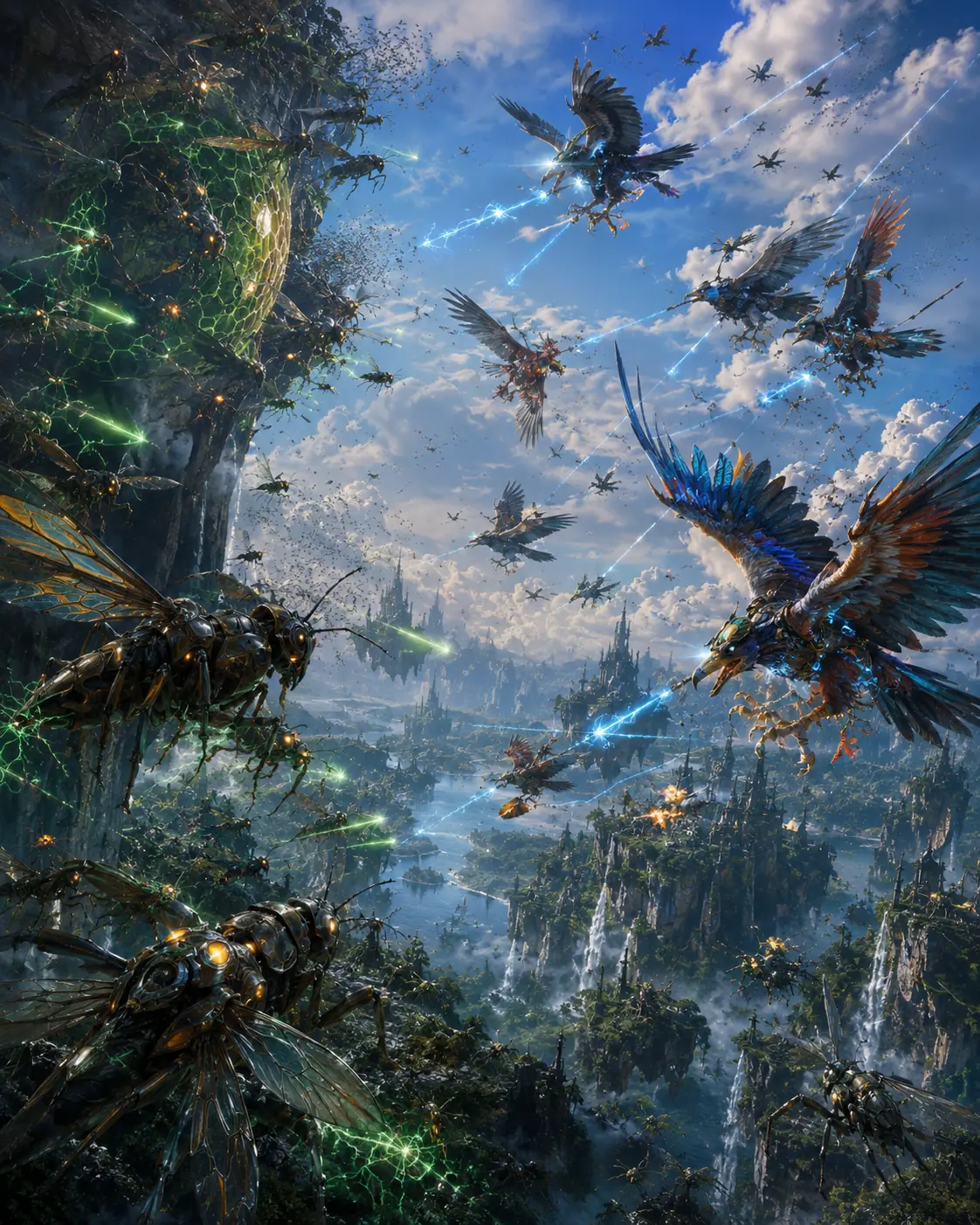
Vertical battlespace
There is no single front line.
Conflict can pass above a storm deck, through an inhabited spire, across a canopy transport web, and into a buried arthropod service city during the same operation. Altitude is not merely higher ground: it affects energy, visibility, temperature, atmospheric density, endurance, communications, and the time available to recover from mechanical failure.
Avian forces range from smaller scouts and technicians to powerful, ostrich-scale fliers adapted to SkyHive’s reduced gravity and dense air. Their size gives them reach, endurance, and payload capacity, but it also increases turning radius, landing requirements, heat load, and vulnerability in confined spaces. Their equipment therefore grows from aerodynamics and precision rather than from decorative armor.
Arthropod forces are equally technological. Specialized bodies operate tools, fabrication systems, sensor networks, climbing equipment, and defensive platforms designed around exoskeletal strength and collective maintenance. Coordination does not make them mindless. Individuals interpret information, exercise judgment, and serve within political institutions whose orders can be disputed, delayed, or refused.
AltitudeWeatherLogisticsVertical citiesLiving infrastructureCivilian protection