Capital
Discovery must become usable capacity
Research, energy infrastructure, conversion hardware, factories, validation and trained service teams require resources even when the mission is humanitarian.
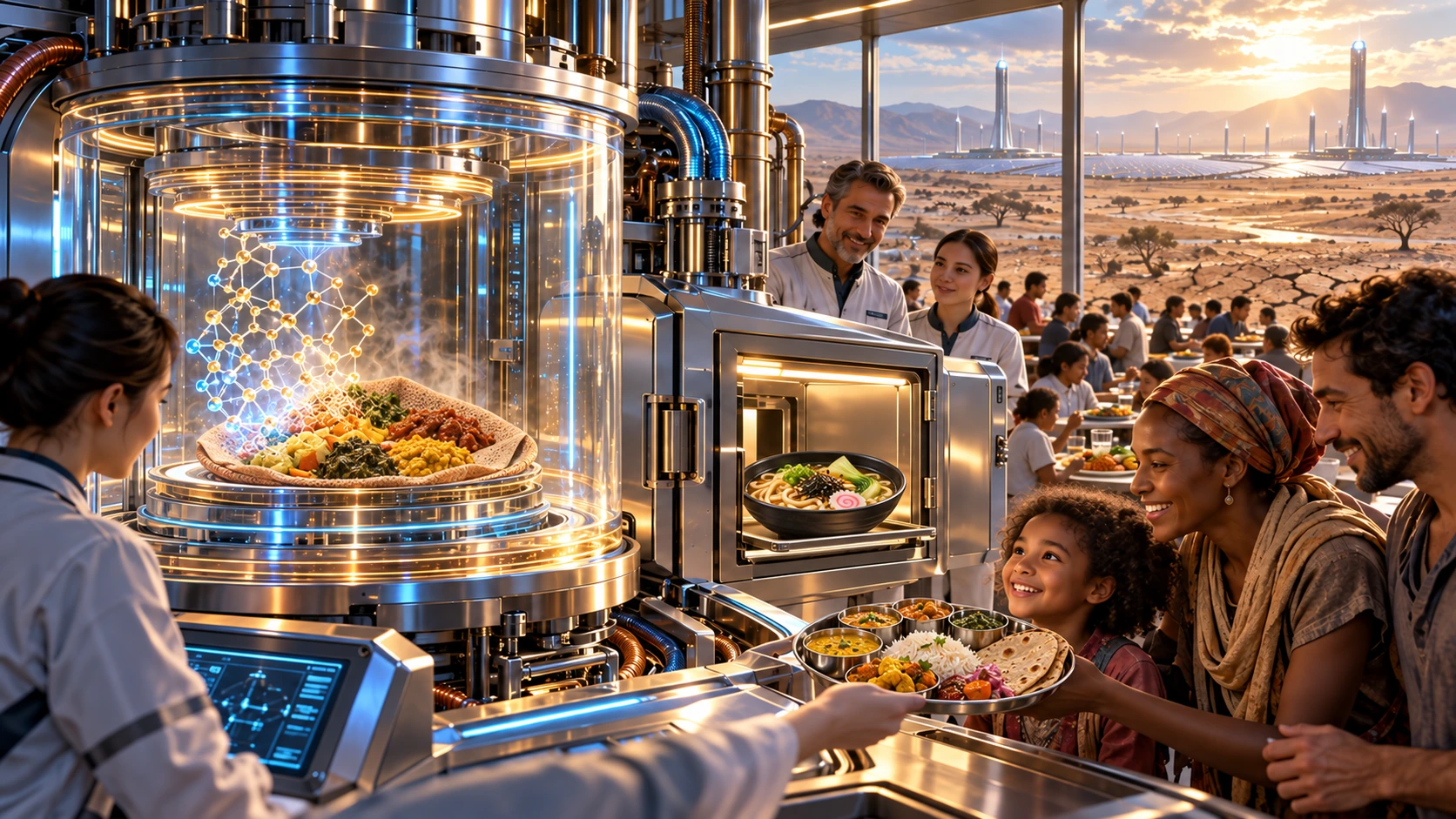
Food creation beyond harvest dependence challenges the economics of crops, livestock, transport and emergency aid. NanoFeast’s breakthrough also creates new pressure around energy, manufacturing, reconstruction patterns, certification and service. The struggle is whether a world capable of feeding people will make that capability accessible.

Each page reveals a different part of the same story. The active area is highlighted below.
From science to social impact
Nutrition, health and food systems
Farms, soils and food security
Clean water for people and places
Relief, resilience and dignity
Markets, work and shared prosperity
Power, rights and accountability
People, culture and a better tomorrow
These public summaries preserve the current story architecture without turning the site into a technical manual.
Research, energy infrastructure, conversion hardware, factories, validation and trained service teams require resources even when the mission is humanitarian.
Installation, power, thermal capacity, local service and institutional restrictions determine who can actually use a replicator.
Farming, livestock, logistics and processing communities face disruption while research, manufacturing, maintenance, cuisine and public operation create different opportunities.
The prospect of food beyond biological scarcity changes contracts, investment and regional choices before every community has working systems.
Monopolies, counterfeit components, unsafe reconstruction patterns and restrictive service rights can create scarcity around a capable technology.
Procurement, open standards, local ownership, training and public accountability influence whether the breakthrough reduces hunger or concentrates power.