Invention of Lying 2: The Fib Whisperer
After society learns that lying exists, the next crisis is subtler: people discover that branding, omission, framing, fiction, and technically accurate manipulation can change behavior without fitting neatly into the old truth/lie binary.
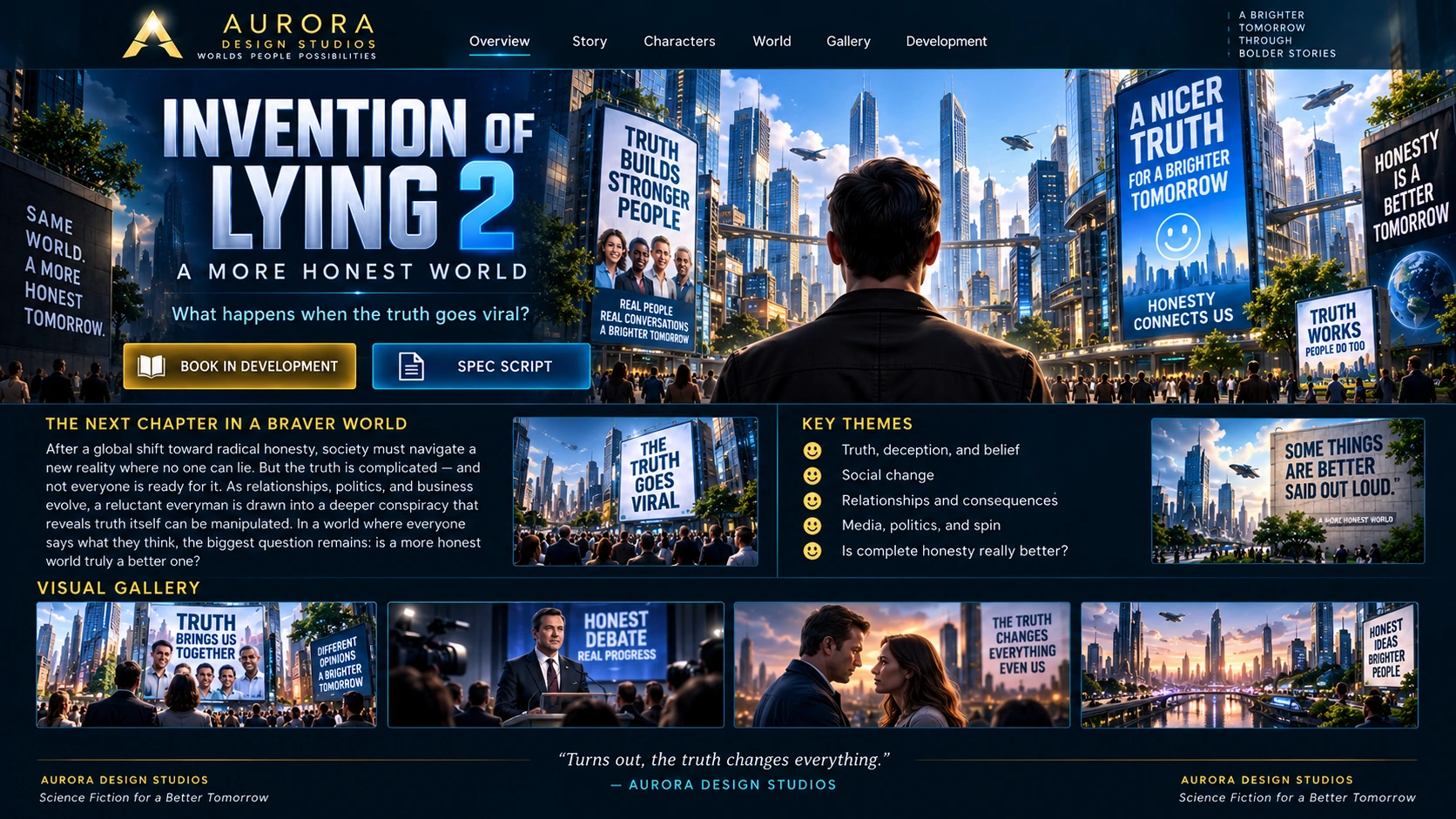
The New Problem
Society now knows that lying exists. The harder problem is learning that manipulation can remain technically truthful through branding, omission, framing, curated disclosure, and emotional performance.
Family and Culture
Mark, Billy, Anna, Emily, Wei, Olga, and Elara bring the argument into family life, media, advertising, politics, therapy, dating, religion, and self-help rather than leaving it as an abstract philosophical debate.
Truth as Power
The Guardians of Truth and Truth Ministry push literal honesty toward institutional control, while Mark argues that fiction, imagination, mercy, metaphor, and compassionate storytelling are not the same thing as fraud.
Source-Grounded Overview
The Fib Whisperer advances the premise beyond the first discovery that people can say things that are false. The sequel asks what happens when a society becomes sophisticated enough to influence people without technically lying. Advertisers can hide behind disclaimers. Public figures can reveal carefully selected truths. News and politics can frame accurate facts in ways that still manipulate. Radical honesty becomes a brand.
That creates the story’s strongest comic and philosophical engine. Literal accuracy is not automatically kindness, wisdom, or fairness. Mark does not argue that deception is harmless; he argues that imagination, fiction, mercy, art, and metaphor have social value that a rigid truth-only culture cannot easily classify.
The conflict becomes personal through Billy and the wider family. His choices force Mark to test what he believes as a parent rather than merely as a public advocate. Elara’s movement away from Guardian certainty should be shown through visible choices and consequences, not simply explained in a late speech.
The Truth Vigil, Guardian headquarters, global cultural settings, Fabrication Festival / Concoction Conference, media systems, and Wei’s Lieometer concept give the story public arenas for the debate. The comedy remains observational and social rather than becoming gadget-driven.
Core Themes
- Truth versus fiction.
- Honesty versus cruelty.
- Imagination as social technology.
- Manipulation without literal falsehood.
- Art, mercy, belief, media, and emotional framing.
Source-control note: The controlling source anchor is Invention of Lying 2 The Fib Whisperer - Final.pdf. The current site record lists 99 pages; prior reviews referenced a 93-page draft and earlier incomplete 56-page / 38-scene material. Those older versions remain development history and are not silently merged into the current source.
Visual-title note: The approved concept art includes the phrase “A More Honest World.” For Phase 2.10 it is treated as visual-development/tagline language. The source-controlled public project title remains Invention of Lying 2: The Fib Whisperer.
Rights boundary: Independent speculative continuation based on pre-existing third-party IP. Aurora Design Studios claims no ownership, affiliation, endorsement, or authorization. Commercial book, film, television, or other derivative use requires permission from the applicable rights holder.