
Crystal Cities
Advanced mixed-material cities engineered for a high-gravity world, with crystalline systems, metal/composite structure, transit networks, portals and space access.
Open section →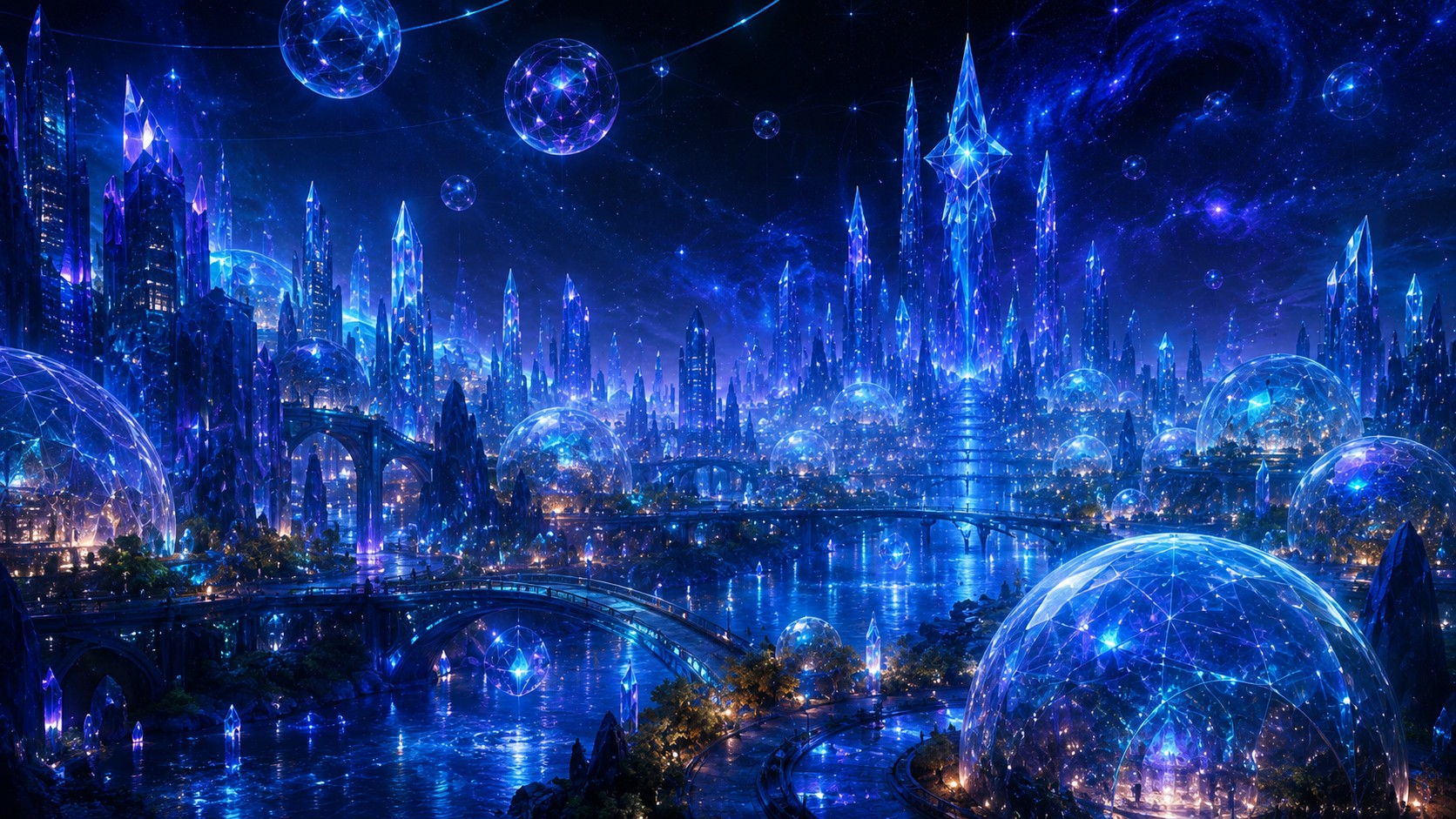
Under a blue giant, Crylar became home to a solid-state biosphere: living lattices, mineral food webs, ionic seas, high-gravity cities, family life, engineering, medicine, art and conflict. The series begins far away, when human instruments first mistake a civilization for noise.
A first-contact and civilization-scale science-fiction arc that begins with evidence, deepens through crisis and cooperation, and expands only after the reader understands Crylar as a living world rather than a spectacle.
Human instruments detect structured noise from a distant blue-giant system. What begins as an anomalous signal becomes the first hard evidence of an engineered crystalline civilization.
Open Book I →Recognition becomes consequence when verified stellar and planetary hazards force migration, political strain, engineering triage and bounded cooperation.
Open Book II →Survival opens the frontier. Crylar, humanity and new peers test whether advanced capability can enlarge another civilization's choices without converting help into ownership.
Open Book III →An Illustrated Atlas of the Crystallians: a visual survey of Crylar’s cities, living crystal ecologies, lineages, environments, transport, and civilizational geography.
Open Book IV →The Crystallians branch is built as a visual world atlas: cities, ecology, archives, conflict, data systems and frontier engineering all remain parts of the same civilization.
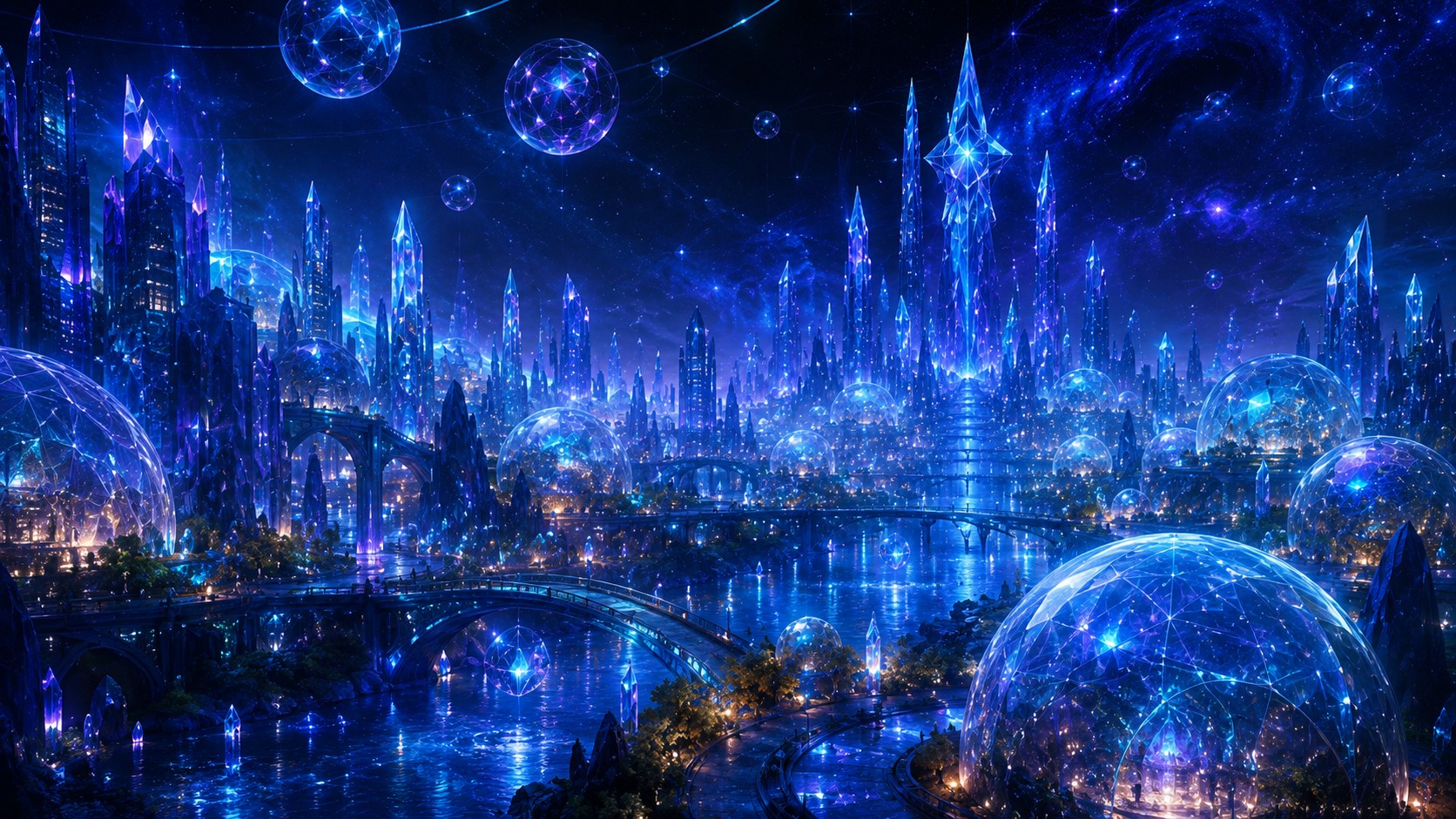
Advanced mixed-material cities engineered for a high-gravity world, with crystalline systems, metal/composite structure, transit networks, portals and space access.
Open section →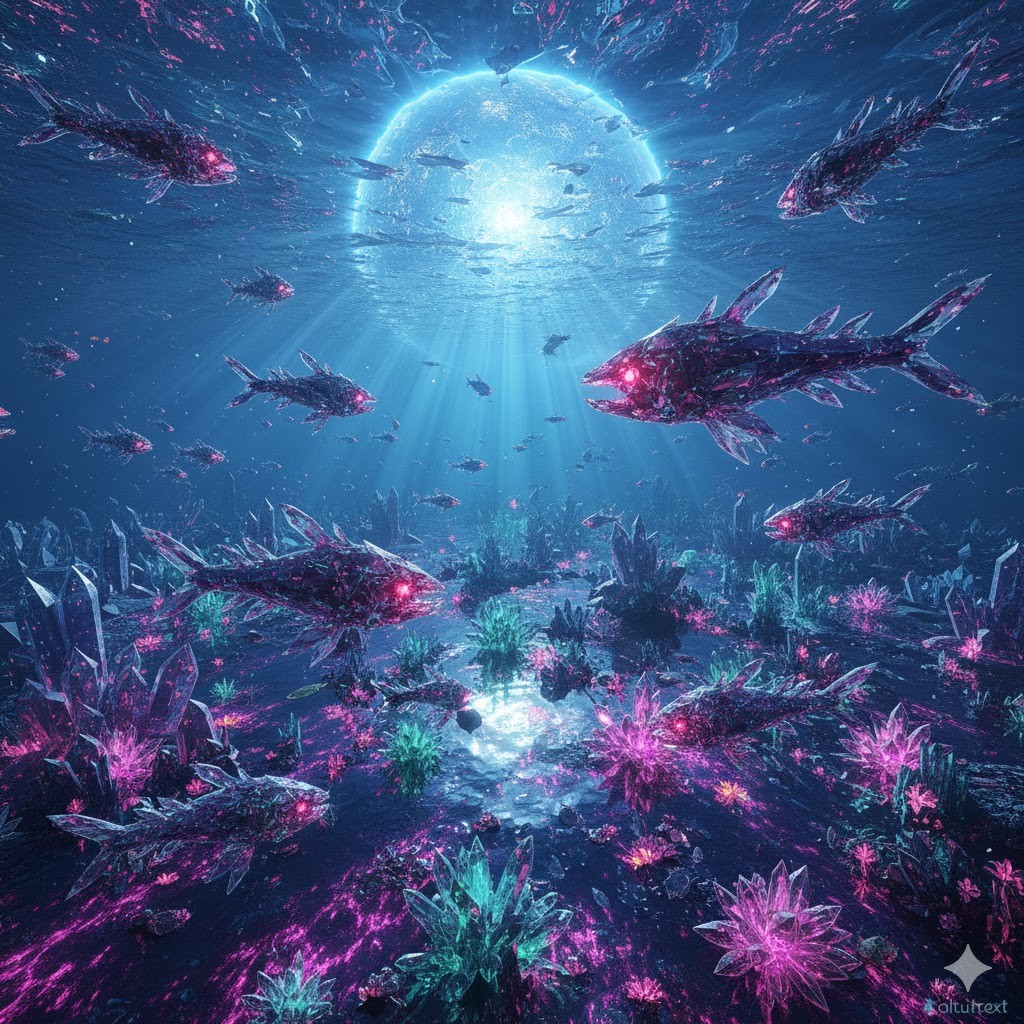
A solid-state biosphere shaped by mineral chemistry, ionic environments, energy gradients, growth, repair, predation and symbiosis.
Open section →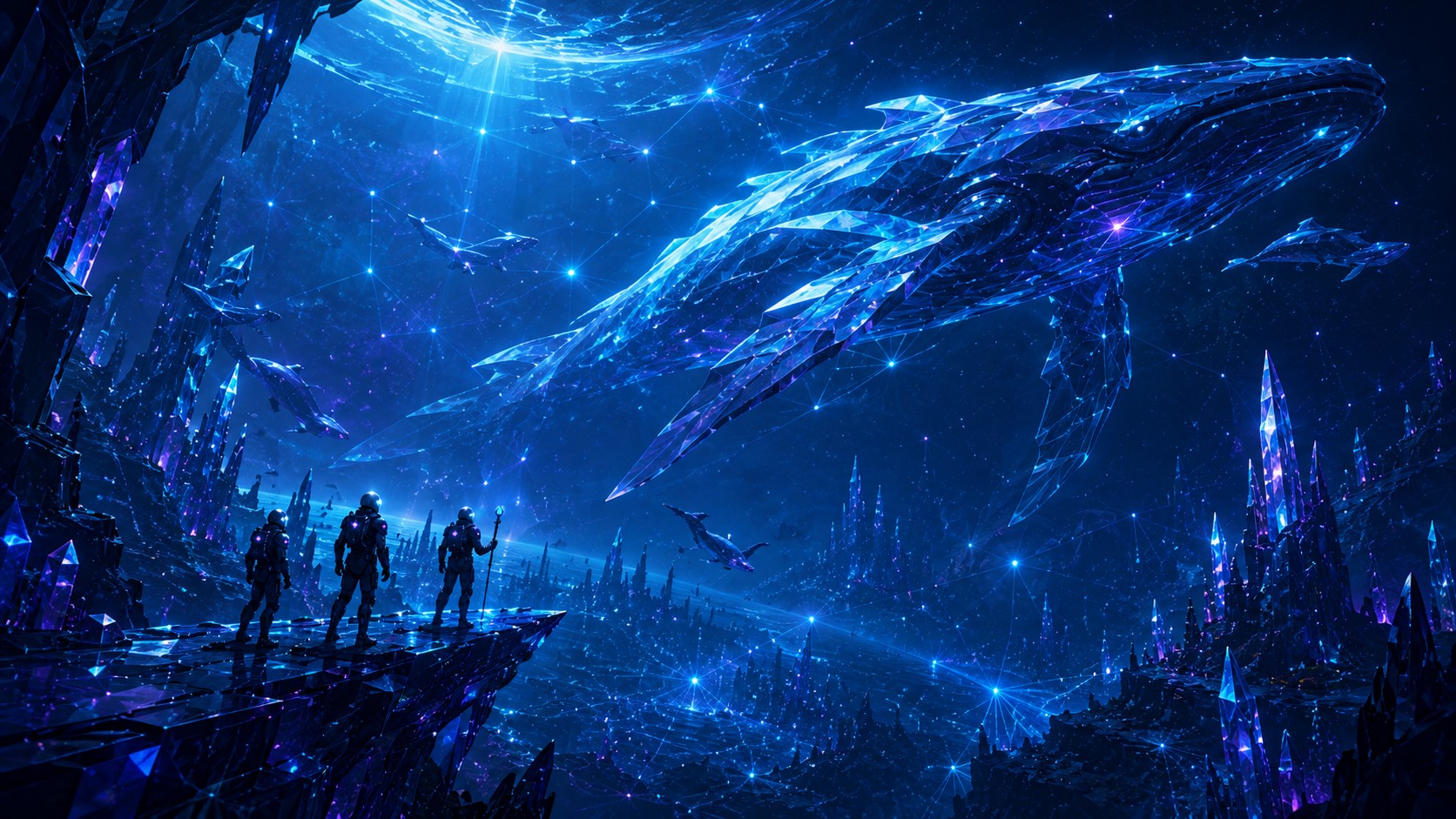
Extreme environments, exploration systems and the outer boundaries of the six-world civilization.
Open section →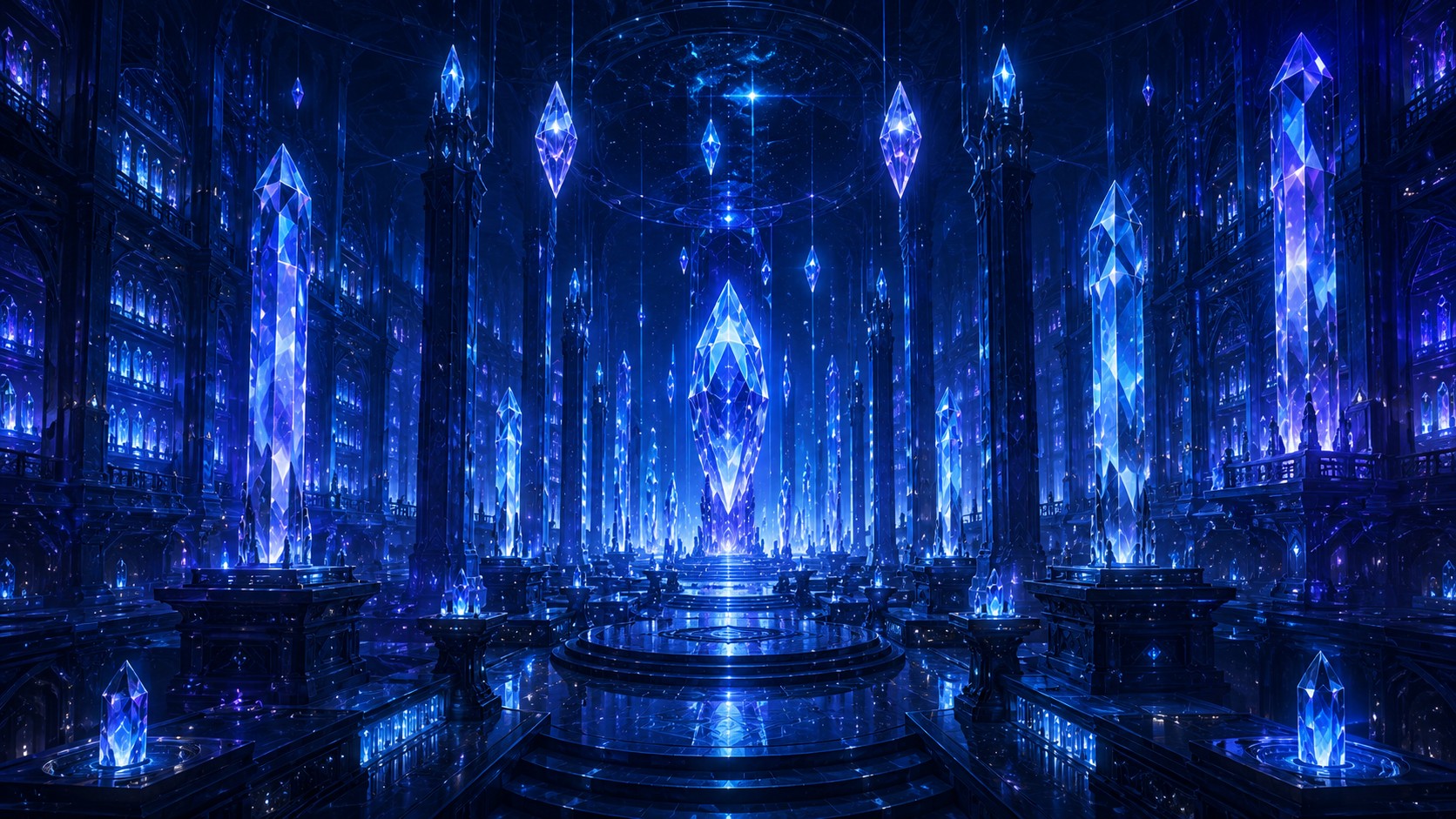
Civilizational memory, governance records and knowledge systems built around durable but bounded storage architectures.
Open section →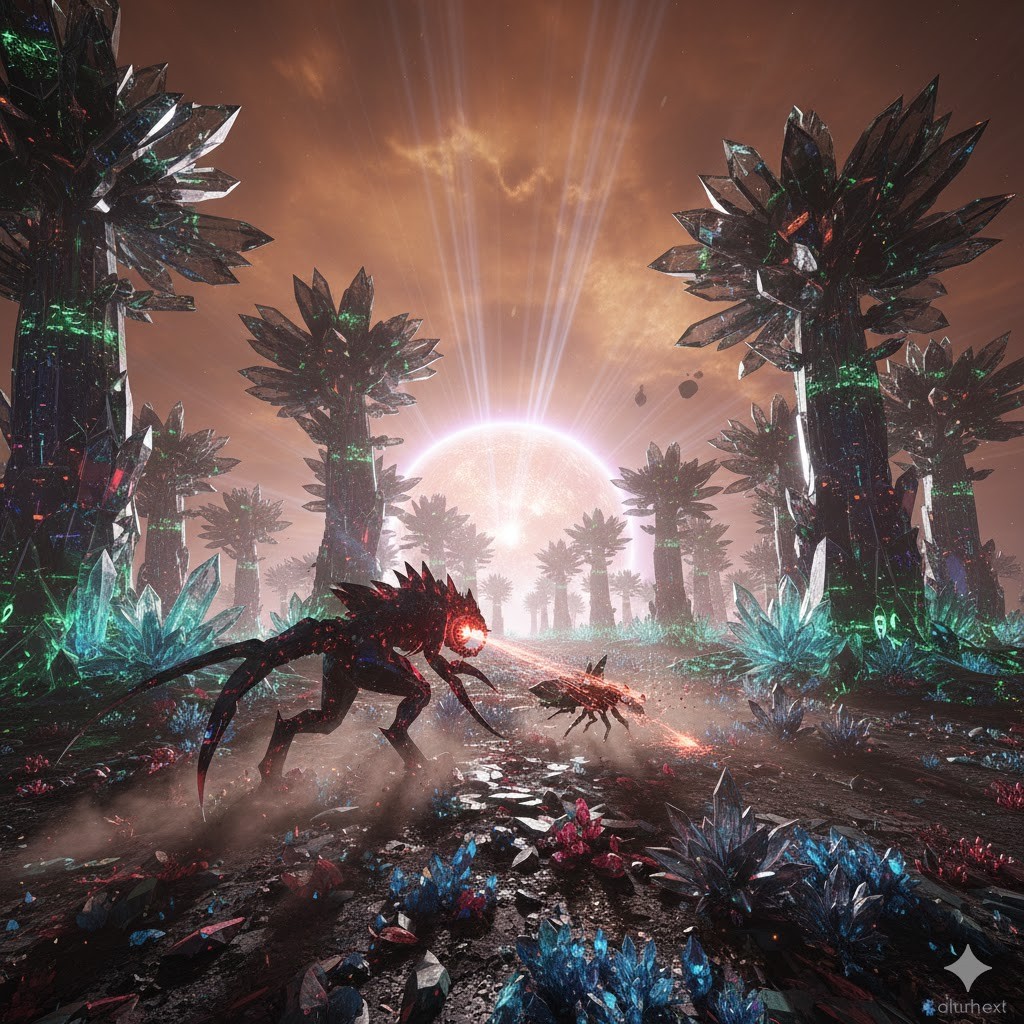
Security, fracture, competing institutions and the cost of protecting a technologically complex civilization without turning it into a monoculture.
Open section →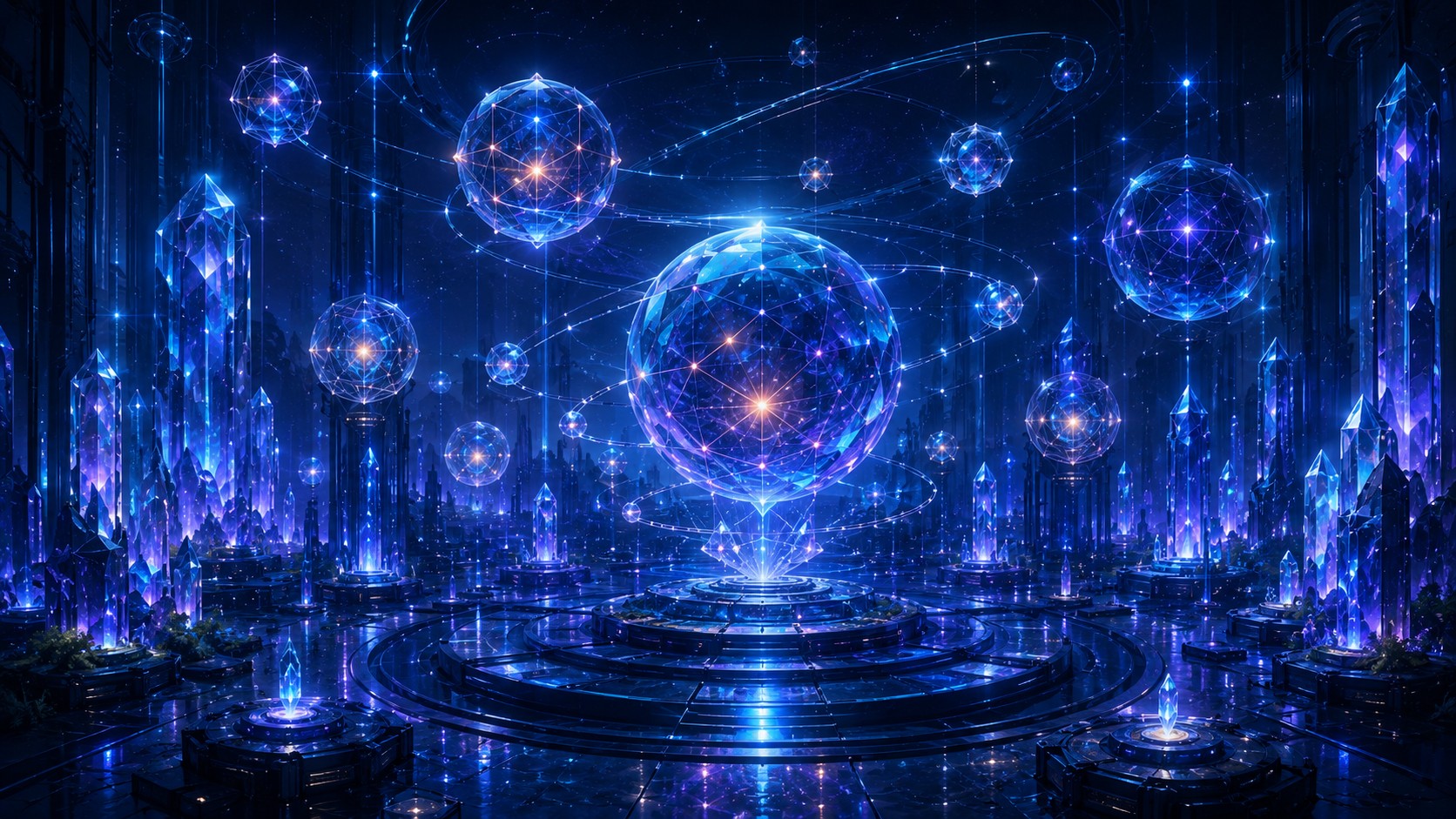
Public-facing concepts for information storage, resonant state control and durable infrastructure—without treating memory as magic.
Open section →