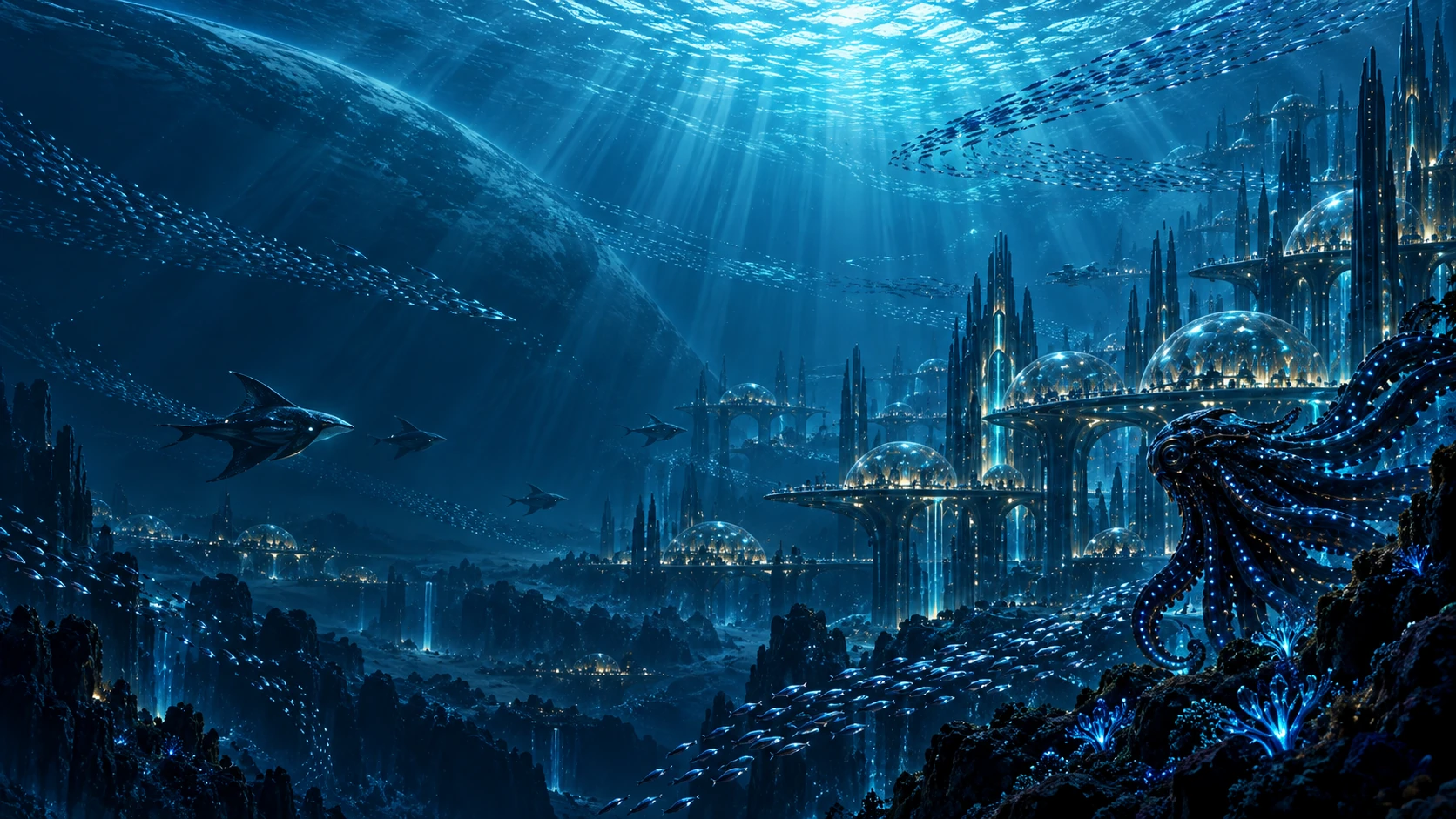
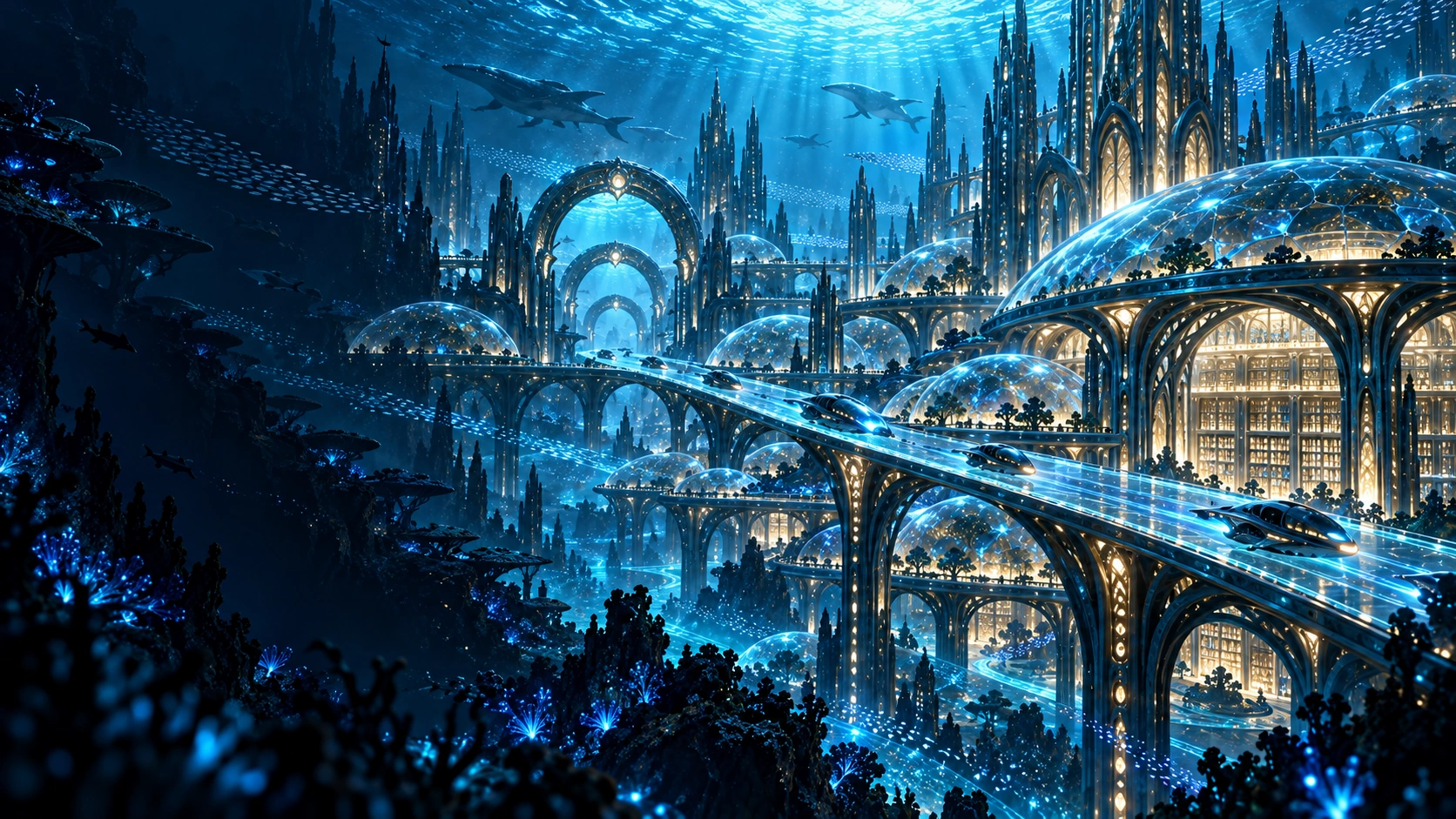
The city is not a skyscraper
A settlement may be anchored to a seamount, suspended in a stable layer or integrated with a geological formation. Habitation geometry follows access, heat rejection, material strength, buoyancy and local currents.
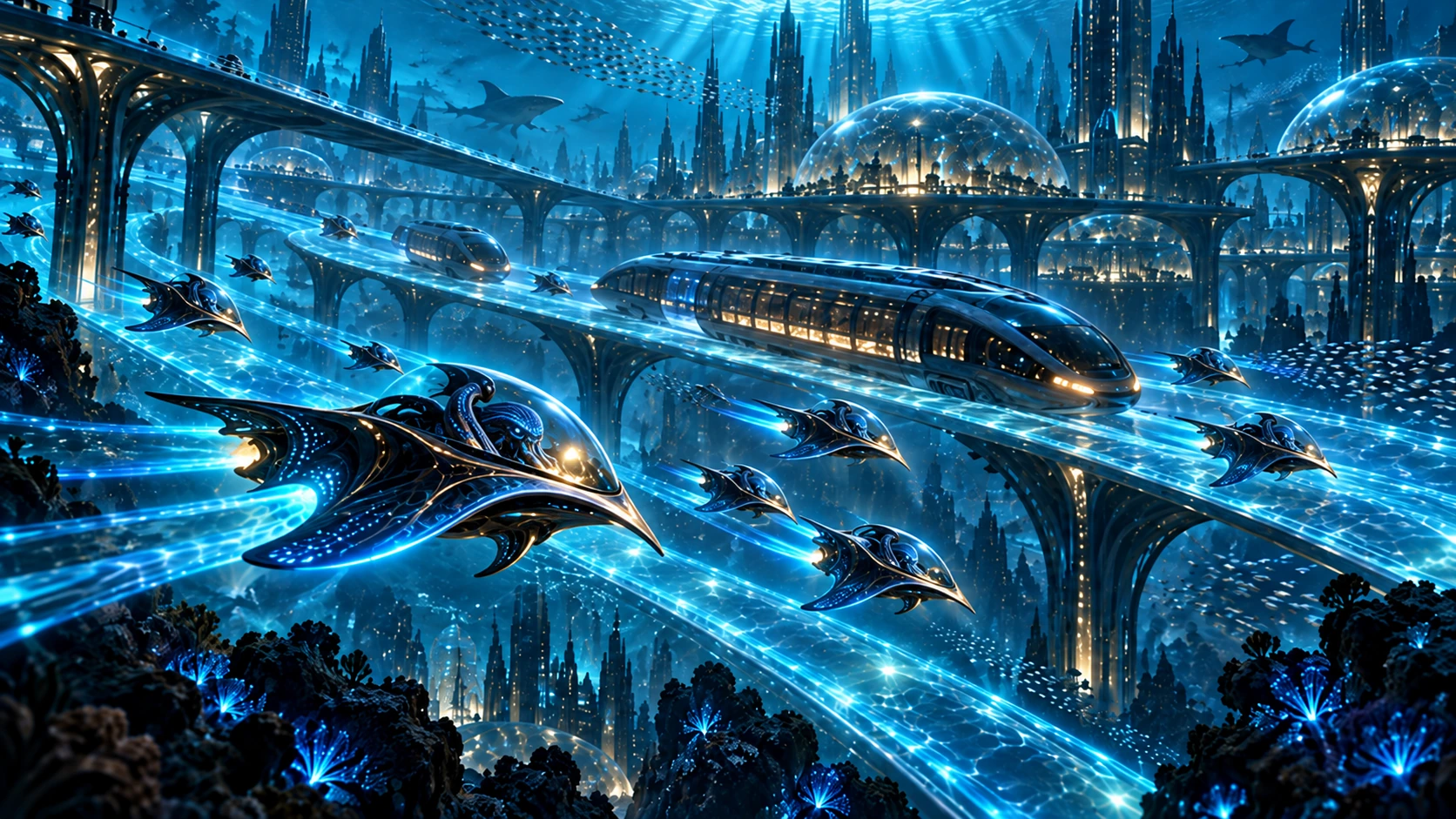
Streets become flow corridors
Transit does not have to follow a dry pavement grid. Distributed arrival zones, sheltered channels, pressure transitions and emergency refuges can structure civic space. Interfaces match the inhabitants’ bodies and sensory range.
An engineered ecosystem
Food supply, waste handling, habitat protection and thermal energy cannot be separated. A remarkable city is one whose systems continue to work when current direction changes or part of its network fails.
Cities beyond the reach of sunlight
Not every Thalassari population inhabits a bright upper ocean. Some cities operate many miles beneath the surface, beyond any direct sunlight. Their illumination, biosphere support and usable warmth come from engineered energy systems, bioluminescent ecologies and, where geology permits, thermal gradients. Pressure, chemistry and the cost of changing depth shape everything from architecture to civic autonomy.