Operations · Operator Consoles · Training
Humans remain in command.
Portal Planet operations are presented publicly as a disciplined transportation-control environment: trained operators, clear readiness states, understandable passenger guidance, bounded automation, and conservative shutdown behavior. Detailed control logic and reproduction-enabling implementation remain offline.
← Back to Portal Planet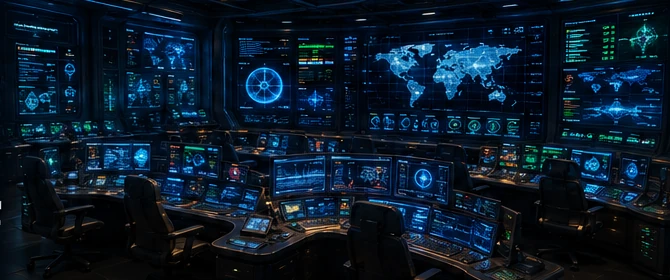
Public readiness language
Four states that people can understand.
Color is never the only safety cue. Public terminals combine plain language, universal symbols, audible or tactile guidance, trained staff, and physical controls. The states below communicate operational meaning without exposing internal permissive logic.
Operator console architecture
Decision support without surrendering authority.
Console design should reduce complexity into a legible operational picture. Automation can monitor, correlate, predict, and recommend; accountable people retain release, restriction, stop-work, and recovery authority.
Paired-site status
Operators see a high-level view of local and destination readiness, service availability, environmental condition, passenger flow, and any active restriction.
Release & stop-work
Safety-significant actions remain attributable to authorized roles. Automation assists but does not become the sovereign decision maker.
Diversion & recovery
When a route is restricted, the public workflow emphasizes alternate portal pairs, legacy transport, rescheduling, and clear communication rather than schedule pressure.
Guides & first-use orientation
Portal Guides explain readiness states, destination conditions, baggage handling, prohibited actions, emergency conduct, and special preparation in plain language.
Separated material flow
Passenger and freight workflows remain visibly distinct wherever practical, supporting inspection, queue clarity, and controlled handling of industrial loads.
Recorded operations
Operational events, restrictions, maintenance handoffs, and significant decisions remain traceable for safety review and continuous improvement without turning public records into indiscriminate surveillance.
Passenger orientation
The public interface stays familiar.
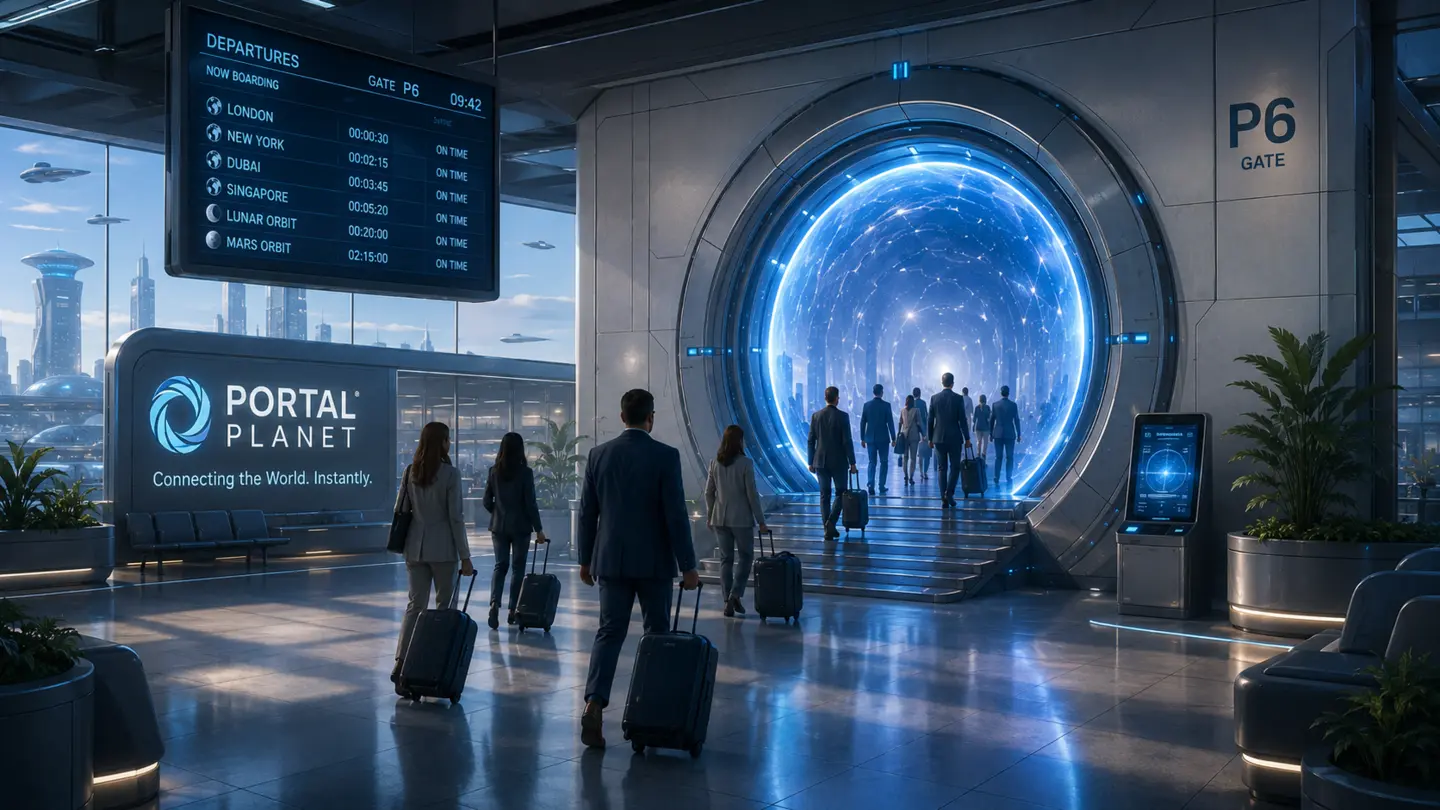
Extraordinary technology should not force travelers to interpret obscure engineering data. Staff, signage, barriers, destination confirmation, accessibility routes, and baggage procedures should feel as understandable as the best modern transit terminal.
- Plain-language state and destination confirmation
- Universal symbols plus multilingual and accessible guidance
- Special-condition preparation before passengers reach the aperture
Training & qualification
Qualified people are part of the safety architecture.
Portal operations require recurrent training, supervised qualification, scenario practice, fatigue-aware staffing, maintenance handoffs, and explicit stop-work authority. Existing transportation, maintenance, inspection, medical, and emergency-response experience can transfer through controlled bridge training rather than being assumed automatically.
Console qualification
Routine operation, degraded service, route restriction, communications loss, and recovery scenarios are practiced before independent duty.
Public orientation
Guides translate technical state into understandable traveler behavior, especially for first-use and special-condition journeys.
Safe handoff
Technicians receive controlled work packages, current configuration information, clear isolation boundaries, and authority to report conditions that do not look right.
Closure & recovery drills
Drills emphasize evacuation, medical response, public communication, alternate routing, and conservative return-to-service decisions.
Cargo & industrial operations
Different loads, different workflows.
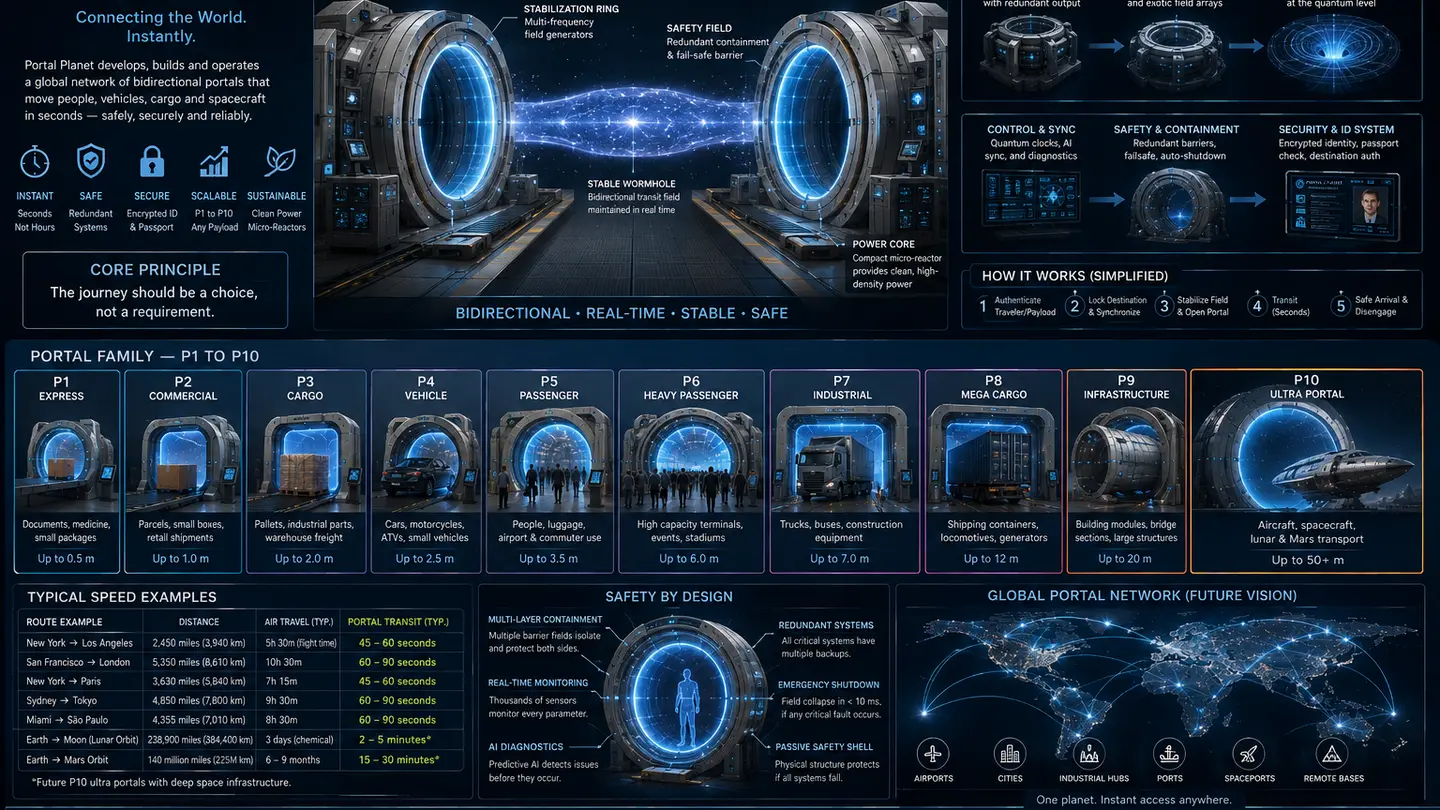
Freight, vehicles, medical supplies, industrial equipment, and future off-world payloads should not be treated as oversized passenger luggage. Public architecture separates load handling, inspection, destination readiness, and operator roles while keeping the detailed security and control implementation private.
Open Cargo & Industry →Public / proprietary boundary
Operations concept, not an implementation manual.
This page intentionally excludes exact control logic, detailed security procedures, internal sensor thresholds, field equations, proprietary interface specifications, process parameters, and other reproduction-enabling engineering information.
© 2026 Aurora Design Studios LLC · All Rights Reserved. Engineering and technical design support by Aurora Design Systems. Public / non-confidential concept architecture. Renderings, terminology, program organization, and original technical presentation are protected works. Patent-sensitive and trade-secret implementation remains controlled offline. No authorization to reproduce, redistribute, reverse engineer, or commercially exploit protected material is granted by publication, except as permitted by law.